Healthcare systems across rural America face rising demand, fewer providers, and limited infrastructure. In Northern California’s North State, wildfires, shifting population needs, and hospital closures have intensified pressure on access to care. The 2018 Camp Fire reshaped the region, removing critical hospital capacity and disrupting services across multiple counties. Closing that gap required coordination, capital, and a sustained response. Enloe Health, an independent nonprofit serving six counties, has stepped into that breach under President and CEO Mike Wiltermood. That shift has placed new pressure on infrastructure, as demand for both inpatient and outpatient services continue to rise across the region.

For Mike, that responsibility has evolved over nearly two decades. “I’ve been here almost 20 years now. The last few years have been really interesting for us. There’s been some phenomenal growth. We’ve been trying to work with other area organizations to just catch up and fill the needs of a community that was really left devastated,” he reflects.
Expanding the role
Enloe’s model has shifted from a hospital-centered operation to a broader network of outpatient and community services. “A few years ago, hospital-based inpatient care was our core. As local hospitals, especially in rural areas, started struggling, we had to increasingly expand into outpatient services,” Mike explains.
That shift prompted a new name. “Switching to Enloe Health recognizes all the other services we offer. There’s no such thing as off-site. We’re all part of a single, integrated organization,” he notes.
Expansion not only improved access but created fragmentation across locations. In 2022, Enloe secured more than $380 million in financing to consolidate services and improve coordination. Much of that investment is focused on addressing the system’s physical footprint. In the years following the fire, Enloe relied on leased spaces that were not designed for clinical care, creating operational complexity and a fragmented patient experience. “We needed a capital infusion after the Camp Fire. In 2022, we saw our best opportunity to refinance at a good rate, so we went all in. The funding consolidates services, improves efficiency, and brings care to our community in a way that’s convenient,” Mike shares.
Building access
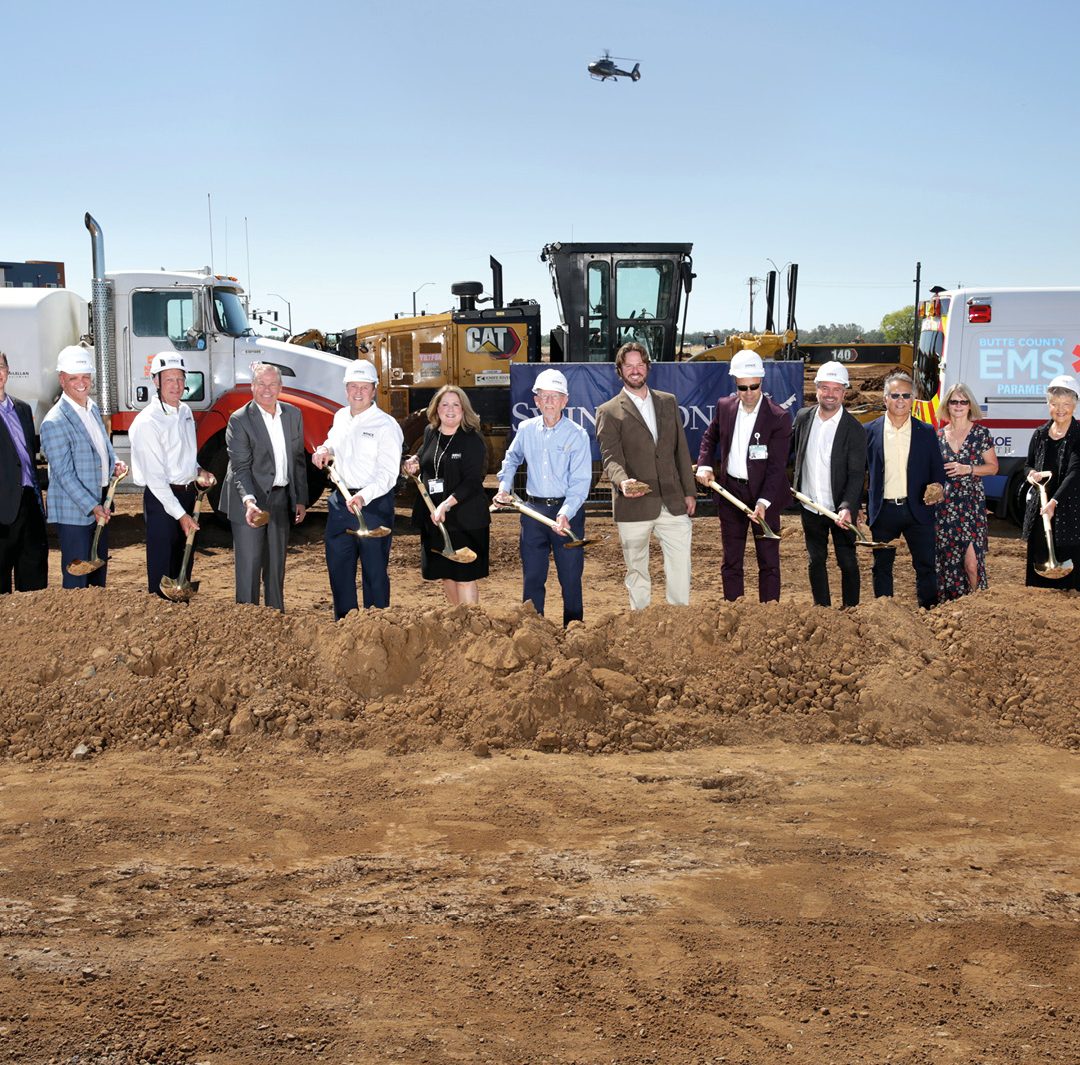
The imminent opening of the Gonzales Comprehensive Cancer Center in Chico will anchor this strategy, informed by regional data revealing disparities across Enloe’s six-county service area. “These counties have cancer rates at least 30 percent higher than the rest of the state, and the highest mortality. That means we’re not diagnosing cases soon enough,” Mike observes. The center consolidates oncology services while expanding what’s available locally. “This will be the largest cancer service between Sacramento and Eugene, Oregon. Our goal is to bring services here that people used to travel to the Bay Area or Sacramento to get,” Mike adds.
For many patients, that travel placed additional strain on already complex treatment journeys. Distance, cost, and time away from home often influenced care decisions, and in some cases contributed to delays in treatment.
Partnerships extend what can be delivered locally. “Our relationship with UC Davis will bring clinical trials to our region that we didn’t have access to before. We’re bringing the university medical center experience to our area,” Mike explains.
For patients managing multiple specialists, often from a distance, that centralization matters. “Managing several specialties, especially from a distance, can be tough for our patients. More availability means earlier diagnosis and treatment. All they’ve got to do is make one phone call if they’re having trouble, and we’ll be there to support them,” he says.
Enloe is expanding cardiac, imaging, and primary care services, but growing demand is only half the challenge. Workforce supply remains a persistent constraint, particularly across rural communities where recruitment continues to lag demand. “We hope to have at least 12 to 16 residents at any time. That program should help us keep some graduates and build our primary care network. It’s not right that people have to wait six to eight weeks for a specialty visit,” Mike highlights.
Leading through change
Mike’s role spans operations, capital planning, and long-term strategy. Financial performance supports investment, but payer mix shapes decisions. “About 75 to 80 percent of our patients have government insurance, so we’re always a bit concerned about covering costs. The fact that we’re profitable, even with these challenges, is a real asset,” Mike notes.

Technology is also reshaping how care gets coordinated and documented. “Epic, our electronic health record partner, keeps rolling out new ways for us to work more efficiently,” Mike explains. The system strengthens communication across care teams, helping clinicians stay connected as services expand across multiple locations. Tools like ambient listening let physicians focus on patients rather than paperwork. “Physicians can talk to their patients, and the computer handles the notes. We’re focused on keeping the human side of care, even as we leverage AI,” he adds.
Enloe takes a measured approach to adopting new tools. “We want to make sure it is proven technology. We don’t want to jump in before we’re ready,” Mike continues.
Sustainability reflects that same long-term thinking. “We have a rich history of organizational sustainability. It’s smart business to be a good community partner and environmentally sound,” he observes. That perspective reflects the expectations of the community Enloe serves, where long-term planning and environmental responsibility support trust.
Awards and rankings matter to Mike, but only up to a point. “We take them with a degree of caution.
Our goal is to be in the top quartile, ideally the top five percent, for patient quality and safety.”
What comes next
The next phase centers on opening the cancer center, consolidating services, and continuing to expand care delivery across the region. Those efforts will allow Enloe to bring more services into fewer, purpose-built locations, improving access and reducing fragmentation for patients.
Mike sees a broader shift needed across the system. “The United States has one of the best health systems for treatment. If you’re 60 and want to make it to 80, you want to be here. But we don’t spend enough on prevention or lifestyle changes. So much of what affects our health comes down to personal behavior we can control. We’d be much better off if we focused there,” he reflects.
A Partnership Built on Vision, Execution, and Community Impact
For nearly two decades, ECG has had the privilege of partnering with Mike Wiltermood, whose work at Enloe Medical Center has helped a regional, independent system perform like a national standout. Since arriving at Enloe in 2007, Mike has overseen growth and modernization, championing capital investment to strengthen the system’s infrastructure. A defining element of that vision has been expanding and integrating oncology services through a comprehensive cancer center designed to increase capacity and elevate care for patients across the region. Throughout this evolution, Enloe has maintained a strong financial foundation and a consistent commitment to quality, earning recognition for clinical performance while continuing to reinvest in the communities it serves. https://ecgmcaz-my.sharepoint.com/personal/mmaslin_ecgmc_com/_layouts/15/Doc.aspx?sourcedoc={6A48509C-81DE-4C8D-8FD2-0EC6F37CD118}&file=Initial Draft_v4.docx&action=default&mobileredirect=true
ECG’s role has been to help turn Mike’s vision into executable, sustainable strategy. Our relationship with Enloe began in 2003. Since then, we’ve led managed care contract negotiations, service line assessments, and provider compensation planning projects. We’ve also helped Enloe strengthen the performance and planning foundation needed to pursue and carry out its multiyear capital investment program. Most notably, we’ve partnered with Enloe on the strategy and execution of its ambitious oncology program. Across these efforts, ECG has helped connect planning to action so Enloe can modernize thoughtfully, expand access, and keep advancing its clinical and financial objectives.
What stands out about Mike and the Enloe team is how they lead: bold vision, disciplined execution, and an unwavering commitment to patients across the region. That combination shows what independent, community-based systems can achieve, and ECG is proud to support organizations like Enloe. We help regional health systems remain independent by optimizing performance, not just improving margins. Whether the objective is to implement alternative revenue strategies, optimize specialty pharmacies, or improve hospital-physician alignment, the aim is straightforward: help leaders keep investing, innovating, and delivering for their communities year after year.