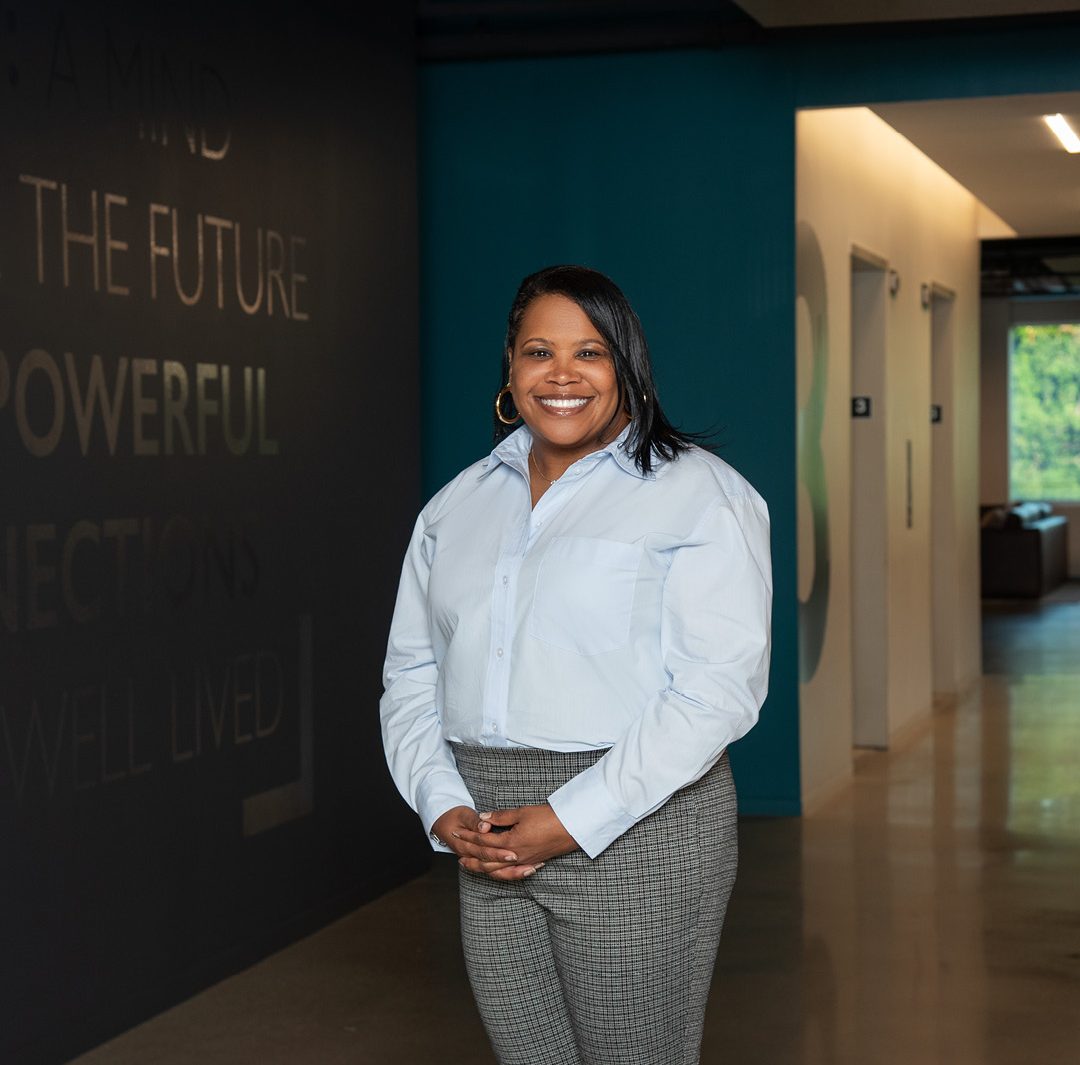
Construction companies work within shifting margins. Labor supply changes. Healthcare costs go up. Regulatory requirements keep growing across states. Meanwhile, employees move between job sites, offices, and regions, often dealing with personal events that do not align with a year plan. Benefits teams operate within this tension, managing cost discipline, compliance, and employee access, especially when clear communication is most important. At DAVIS Construction (DAVIS), Sherill Kirksey, Benefits Manager, takes on that responsibility. She joined the company during renewal season, right as the team was growing across new regions.

Headquartered in Rockville, Maryland, DAVIS has nearly 60 years of experience delivering complex projects across the Mid-Atlantic region. Founded in 1966, the employee-owned general contractor operates across education, healthcare, government, commercial, multi-family residential, hospitality, and secure-space construction. It highlights sustainability, virtual construction, and long-term client relationships, grounding its operations in core values of trust, service, inclusion, integrity, and building relationships. Those values influence not only how DAVIS delivers projects, but how it supports the people behind them.
Sherill oversees benefits strategy for employees across Washington, D.C., Maryland, Virginia, Pennsylvania, and the Carolinas. The company’s project-driven structure means teams expand and contract with bids, schedules, and regional demand. Her role connects financial planning, workforce well-being, and risk management across that footprint. “What drives my work is making sure employees have a benefits program that truly supports work-life balance. Benefits must reflect the company’s values while evolving with employees’ needs over time,” she shares.
That responsibility feels urgent because employees rarely reach out about benefits during calm times. “Employees usually come to benefits during life moments that feel urgent, like leave, loss, surgery, or major transitions,” Sherill points out. In those situations, the work calls for structure and clear, steady communication.
Employee benefits
DAVIS runs as an employee-owned company through an Employee Stock Ownership Plan. The ESOP connects compensation, retirement, and company performance. “Employees acquire ownership by working at DAVIS. The ESOP structure provides employees with an additional retirement benefit in addition to their 401(k),” she notes. The ownership model shapes how benefits fit into the broader employment experience. Communication and education are central, especially for employees new to an ESOP. Sherill collaborates with internal partners and recordkeepers to clarify eligibility, vesting timelines, and long-term value. She highlights how benefits connect directly to hard work and tenure.
Her perspective comes from a career that spans several sectors. Sherill gained experience in higher education, healthcare, financial services, and government contracting. She chose not to tie her expertise to a single industry. “Benefits are universal; they matter regardless of where someone works,” she points out.
That outlook started early. Sherill began her career as a contract employee without access to benefits. “I experienced firsthand how deeply the absence of benefits can affect someone’s life,” she recalls. That experience still guides how she prioritizes access, explanation, and responsiveness today.
Mentorship further shaped her leadership approach. Sherill credits Dr. Maria Green, whom she worked with at Catholic University and Children’s National. “She showed me that responsiveness and empathy are not optional in this work. Even when the answer is no, how you respond in that moment matters,” Sherill reflects.
When DAVIS approached Sherill, it faced renewal pressure while expanding into new markets. Drawing on her experience with self-funded plans, she jumped into negotiations right away. “Through negotiation and transparency, we brought that down to a low single-digit increase,” she reports, referring to the medical renewal she managed during her first months.
DAVIS kept its employee-only medical coverage model through that process. “We were able to preserve that model,” Sherill explains, while redesigning parts of the plan and adjusting deductibles. Transparency guided communication every step of the way. “Transparency creates trust,” she adds, pointing out that employees received context around plan performance, cost drivers, and shared responsibility.
In addition to medical coverage, Sherill oversees retirement, disability, dental and vision benefits, along with inclusive family‑planning programs designed to support employees across life stages.
Cigna Health Plan
The company’s medical plan uses a national network to support DAVIS’s expanding reach. Data guides oversight and planning. “Utilization data is central: claims activity, leave usage, and vendor performance,” Sherill notes. These indicators shape cost-containment strategies, timing of plan adjustments, and benefit design decisions. Sherill reviews strategy and compliance on a regular schedule. “I meet biweekly with our broker, review compliance, and track progress against our annual benefits roadmap,” she shares. The roadmap sets priorities early, which helps the team move through the year with fewer last-minute decisions as renewal approaches.
Benefits decisions align closely with finance. Sherill partners with senior leadership to evaluate cost, risk, and workforce impact together. “We have a strong partnership with our CFO and senior leadership,” she observes. That collaboration supports both near-term adjustments and longer-range planning.
DAVIS’s workforce includes field and office roles, multiple generations, and several regulatory environments. “You have to understand generational needs, job demands, and state-specific requirements,” Sherill remarks. Core benefits stretch across regions, while state-mandated leave programs require localized compliance and education.
Communication is essential in that complex environment. “We communicate in clear language and meet employees where they are,” she explains. Access shapes how information is delivered. “Many employees work from job sites instead of offices,” Sherill points out, highlighting the need for mobile-friendly tools and flexible communication channels.
Workday at DAVIS
Technology makes that accessibility possible. DAVIS uses Workday as its HR platform. Sherill brought prior experience with the system to her role. “Workday changed how we administer benefits,” she comments.

Employees handle benefits tasks from any device. “Each employee can manage life events, beneficiaries, and enrollments from anywhere they work,” Sherill says. That access supports compliance and responsiveness during hiring, leave events, and employment transitions.
The platform improves reporting accuracy and vendor integration. Sherill sees technology as essential, not optional. “You have to have some type of system in place,” she insists, especially as regulatory timelines tighten and data requirements grow.
Beyond core benefits, Sherill champions wellness and engagement programs that fit the realities of construction work. “We’re introducing biometric and hearing screenings,” she mentions, along with virtual wellness options designed to reach employees who move between job sites and remote locations.
Those programs sit alongside traditions that have stayed consistent as the company has grown. The annual Turkey Trot, held during Thanksgiving, creates a shared experience for employees across roles, locations, and schedules. Everyone joins in and receives a company-provided turkey or pie, making connection easy and genuine. For Sherill, the event shows that engagement doesn’t require scale or formality. It takes intention and consistency in a distributed workforce.
Her leadership style focuses on flexibility and accountability. “Everyone needs a different level of support,” she acknowledges. Learning is always front and center. “It’s okay to make a mistake. What matters is how you recover and learn from it.” She holds everyone to the same standards. “I don’t expect more from my team than I expect from myself.”
Looking ahead, Sherill monitors the pressures shaping benefits design. “State-paid family leave expansion, rising healthcare and pharmacy costs, workforce aging, and talent shortages will shape benefits strategy,” she observes, while she keeps an eye on evolving family-planning benefits.
Her leadership comes from lived experience, starting with the early years without benefits to leading strategy today. Outside work, Sherill values balance. “My family keeps me grounded, and seeing employees able to use and benefit from their coverage keeps me focused on why I do this work. For the first time in my career, I don’t carry dread into my commute.”