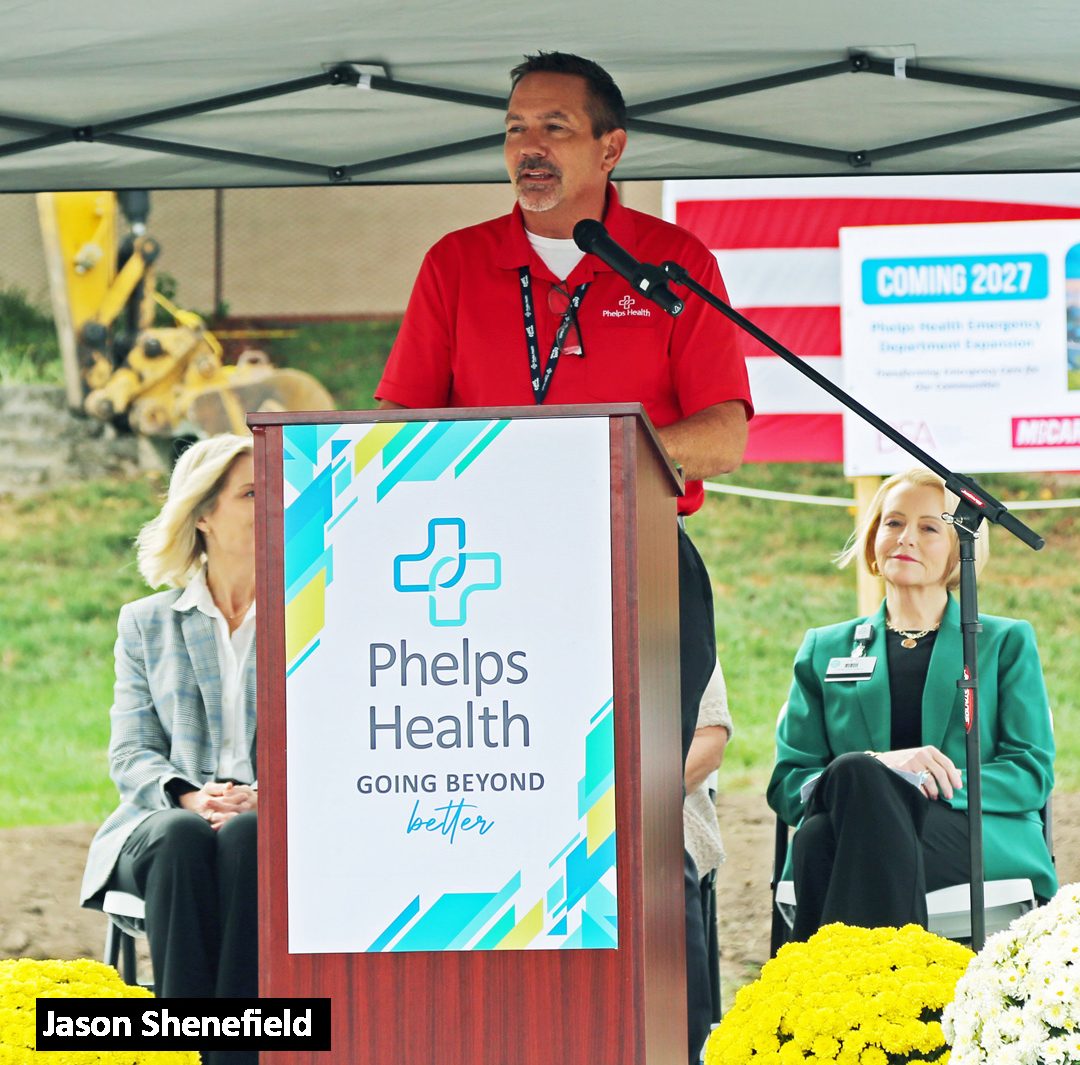
Healthcare was never part of Jason Shenefield’s plan. Growing up in rural Iowa, he joined the US Navy right after high school, aiming for a career in law enforcement. But the Navy had other ideas and assigned him as a hospital corpsman, introducing him to healthcare in a way he never expected. “Healthcare kind of chose me.” That experience shaped everything that came next in Jason’s career.
More than three decades later, Jason leads Phelps Health as President and CEO, overseeing a healthcare system that serves more than 200,000 residents across six counties in south-central Missouri. His responsibilities span strategy, operations, workforce development, advocacy, and organizational growth at a time when rural healthcare providers face mounting pressure to deliver more services, recruit more clinicians, and navigate increasing complexity.
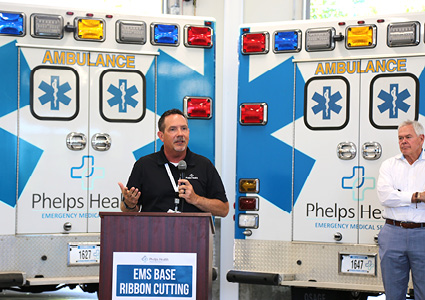
Many of the leadership lessons Jason relies on today go back to those early Navy years. “What’s always interested me is how to problem solve. How do we care for people who are vulnerable, especially in chaotic environments? How do we help them get better and make sure they feel cared for and treated with dignity and respect?” The answer is bigger now than when he started, but the mission stays the same.
Lessons in service
Working in one of the Navy’s busiest clinics gave Jason an early look at both patient care and healthcare operations. After boot camp and training in Great Lakes, Illinois, he stayed at the base as a hospital corpsman. “We cared for young, healthy recruits in a clinic that saw nearly 100,000 patients a year. Early on, I took on leadership roles and worked out how to get through each day as efficiently and effectively as possible.”
That work taught him more than clinic management. It shaped the principles he would carry into every leadership role. “It reinforced the importance of ethics, integrity, and doing the right thing, even in challenging times.”
After leaving the military, Jason held healthcare leadership positions in Illinois and Wyoming before joining Phelps Health as Chief Operating Officer in 2016. Operations became a big focus, but he never lost interest in strategy. “I spent a lot of my career focused on strategy and planning.” That balance proved valuable when he became CEO in 2021. “When I stepped into the CEO role, I leaned into that experience. It’s become one of my strongest skill sets.”
Upon becoming CEO, he already knew the organization inside and out. “I understood the operations and could quickly define where we needed to go. From day one, I started moving that strategy forward.”
Building the pipeline
Workforce shortages may shape the future of rural healthcare more than anything else. Like many healthcare leaders, Jason sees physician and nursing shortages as defining challenges for the next decade. That’s why he’s advocated for rural residency programs and why Phelps Health keeps investing in its own physician training pipeline.
Building a physician pipeline takes years, but the workforce shortage won’t wait. “Our first cohort isn’t going to start until 2028. It would be much more enticing for us and for others if there were real incentives.”
A single residency program will help, but it won’t solve rural healthcare’s staffing crisis. “The pipeline isn’t big enough today, and it’s only going to fall further behind. We need more urgency around creating funding incentives for organizations to build these programs.”
Retention matters just as much. Several years ago, the organization started a wellness committee with physicians, clinical staff, and nonclinical employees to address burnout and mental health. “We take this seriously and work hard to understand what people are experiencing and what resources they need to reduce burnout across the organization.”
At the same time, maintaining access to care takes a financial model that can support it. Reimbursement pressures affect providers nationwide, but Jason prefers not to dwell on things outside the organization’s control. “We can’t necessarily change that, but what can we do to grow?”
Under Jason’s leadership, Phelps Health has expanded into new service lines, including spine and bariatric care, while investing in direct-to-employer health plans and a Medicare Advantage partnership. “We’re focusing on growth and creating those new revenue streams.”
Shared ownership
Inside Phelps Health, Jason makes sure innovation isn’t just for executives. The Bright Ideas initiative encourages employees to spot opportunities in quality, safety, operations, and finances. Team members whose ideas get implemented receive incentives, so participation is built into the culture. “If someone sees a problem and says, ‘Here’s how I think we could do this differently,’ we have a group that reviews that idea.” The program is rooted in a simple belief: the people closest to the work often see opportunities leaders might miss. “If we don’t give them an avenue to share, they’ll just see the problem and think, ‘Well, there’s nothing I can do about it.’”
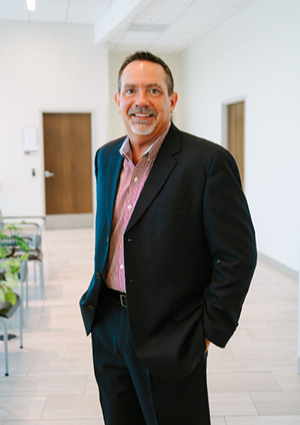
Jason introduces the initiative during new employee orientations, encouraging fresh perspectives from an employee’s very first day. That same philosophy extends beyond the organization. Through a public series on healthcare finance, regulation, and reimbursement, he breaks down some of the industry’s complexities in plain language. “My goal is to help people better understand the realities of healthcare.”
The initiative reflects Jason’s belief that healthcare systems need to do more to explain the realities behind decisions that affect patients and families. “We owe our communities transparency. People should understand why healthcare organizations make certain decisions and how the system works.”
For all the attention being paid to artificial intelligence, Jason believes another conversation could have an even greater impact on healthcare’s future. “The governmental payers are really struggling to figure out how to manage the expense of healthcare. In the next five to ten years, there’s going to be a big shift there.”
The bigger concern is whether the industry is asking the right questions and addressing the relevant issues in the first place. “We’ve got to stop taking current payment systems and simply tweaking them, thinking that’s going to fix the problem.”
As the industry grapples with workforce shortages, funding pressures, and the prospect of significant structural change, Jason believes many of healthcare’s biggest challenges share a common thread. “I would dramatically decrease the administrative burden. We spend so much time trying to figure out how to be compliant and meet all the rules and regulations. If I could wave a magic wand and see a dramatic decrease of the administrative burden that exists in the US healthcare system, knowing that there would be improved quality of care and that at the end of the day it’s easier for patients to navigate the health system, that would be my wish.”