Technology

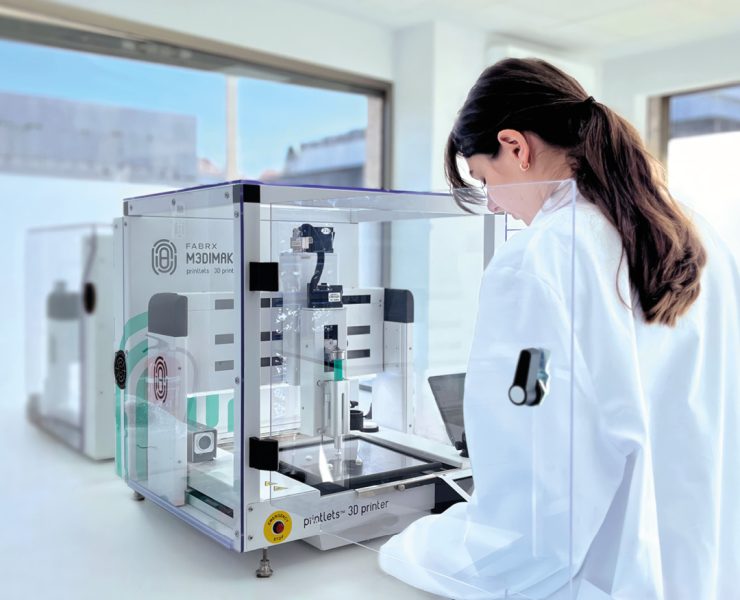
a laboratory setting featuring a pharmaceutical 3D printer
Pete Pharma is reshaping pharmaceutical compounding through 3D printing, linking innovation directly to real‑world use

“You miss every shot you don’t take.”
Marc Joiner does not treat that as just a slogan. It shapes his decisions and guides his career. Today, it forms the foundation of his work as Co-founder at Pete Pharma, where he leads pharmaceutical compounding in a new direction.

an aerial view of the Bog River near Tupper Lake located within the spectacular Adirondack Park in Upstate New York
Cybersecurity and digital transformation at Nathan Littauer Hospital & Nursing Home in upstate New York

Patient charts, diagnostic images, and sensitive telemetry data no longer stay within the concrete walls of the hospital. Instead, they live within complex digital networks that are constantly under threat from global actors. Because of these vulnerabilities, New York State has enacted the nation’s toughest hospital cybersecurity regulations under 10 NYCRR Section 405.46

Dr. Sameer Puri
Dr. Sameer Puri incorporates ownership, education, and digital systems to shape clinical choices at Imagen Dental Partners

Dentistry is going through a time when consolidation is outpacing clinical trust. Financial pressures, new ownership models, and rising technology costs are changing how practices work and how patients receive care.
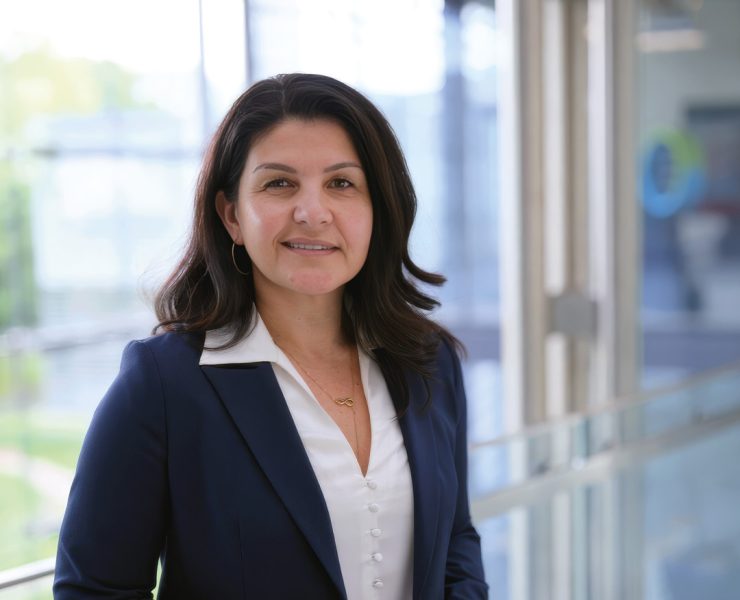
Cristina Nitulescu
At Bayer Consumer Health, the CIO drives AI-led transformation, scaling platforms, empowering teams, and advancing global self-care innovation

Cristina Nitulescu has always been drawn to big, complicated problems. Today, as Chief Information Officer (CIO) for Bayer Consumer Health, she is reshaping how the division uses technology and science-based self-care to reach billions of people and help them build healthier futures.


Flexicare Group main image
From UK manufacturer to global clinical partner: Flexicare’s advancement in medical device manufacturing and responsible growth

For more than three decades, Flexicare Group (Flexicare) has been driven by one clear purpose: supporting clinicians with dependable medical devices that they, and their patients, can rely on every day.

nursing students from the University of Florida College of Nursing interacting with a patient
April York transforms the revenue cycle at UF Health through system efficiency, technology integration, and leadership development

Since joining UF Health in September 2025, April has played a key role in advancing a unified, enterprise-wide revenue cycle strategy. She leads both hospital and physician revenue cycle operations, focusing on standardization, scalability, and operational alignment. Her leadership supports the organization’s ability to navigate evolving payer requirements, optimize reimbursement accuracy, and maintain a strong patient-centered approach while driving sustainable growth.

a digital composite illustrating the intersection of healthcare and advanced technology.
Paul Watson explains why modern digital infrastructure, not standalone AI models will shape the future of healthcare

Paul Watson, Vice President and Global Lead for Healthcare & Life Sciences at Hitachi Digital Services, has more than 20 years of experience helping healthcare organisations turn data, AI, and digital platforms into practical improvements in both clinical care and operational efficiency. His work spans hospital operations centres, research data infrastructures, and national screening programmes, collaborating with partners such as the NHS, SingHealth, and Verizon.
He contends that the future of healthcare AI won’t be determined by the most advanced algorithms, but by organisations that focus first on strengthening and modernising the underlying digital foundations that support them.

a digital illustration depicting a cybersecurity or data breach theme.
Ransomware cripples healthcare systems, quickly exposing backup weaknesses, compliance delays, and patient safety risks

As cyberattacks become more frequent, healthcare organisations have invested heavily in backup infrastructure and disaster recovery planning. On paper, these safeguards appear robust: if systems are encrypted or taken offline, the expectation is that services can simply be restored from backups and operations will quickly resume. However, real-world incidents show that recovery is rarely as smooth or as fast as leaders anticipate.

a depiction of the future of healthcare, where AI-driven robots may work alongside human medical staff
Ultra-low latency networks will determine whether AI saves lives, scaling remote surgery, emergency response and training

Surgeons in one country operating on patients thousands of kilometres away. Ambulances acting as mobile intensive care units, guided in real time by specialists and powered by live imaging. Medical students training in fully immersive virtual environments that accelerate their skills and careers.
A decade ago, these ideas would have sounded like science fiction. Today, driven by advances in AI, they are rapidly becoming reality—and in some cases, they are already in use.

Jim Mercadante, Chief Commercial Officer at Qure.ai
Qure.ai’s commercial lead, Jim Mercadante explains how clinical AI supports detection, workflow, and access worldwide

At Qure.ai, Jim Mercadante’s work centers on bringing artificial intelligence into everyday clinical practice in a way that supports—not disrupts—how care is delivered.

The company’s technology is applied across radiology, emergency medicine, infectious disease, and clinical research, where it analyzes medical imaging such as X-rays and CT scans to help identify potential abnormalities earlier in the workflow. Rather than replacing clinicians, the system is designed to act as a support layer that highlights urgent or high-risk cases so they can be reviewed more quickly.

Professor Esther Rodriguez Villegas
Professor Esther Rodriguez Villegas on diagnostic pathways, reimbursement, and home testing in sleep apnea care

In everyday clinical practice, symptoms usually appear long before a diagnosis is made. One patient presents with resistant hypertension. Another reports persistent, unrelenting fatigue. A third struggles with attention and concentration at school or work. These cases move routinely through primary care, cardiology, endocrinology, psychiatry, and paediatrics. Yet sleep is rarely placed at the centre of the diagnostic process, even when the pattern of symptoms points strongly in that direction.
As a result, care often focuses on managing downstream effects while the underlying cause goes unrecognised and untested.

FirstNet emergency connectivity
FirstNet Expands Connected Responder Model in Care Delivery

The delivery of emergency healthcare now starts before a patient arrives at the hospital. FirstNet, Built with AT&T, announced its expansion of support for the “connected responder” model.