Features
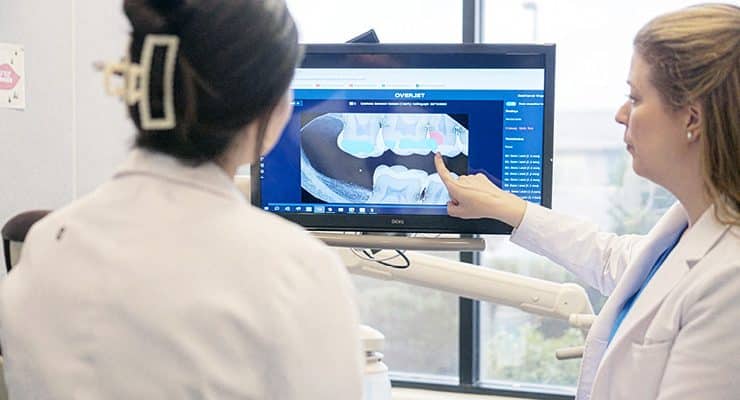
Healthcare delivery is under growing pressure from rising costs, limited access, workforce shortages, and rapid technological change. Dentistry reflects these challenges in a particularly personal and hands-on way, where clinicians must balance patient care with running a business, managing staff, overseeing billing, and making independent decisions—often in isolation.
Heartland Dental, the largest dental support organization in the United States and founded by a dentist, provides non-clinical administrative support to dental practices. This allows dentists and hygienists to focus more fully on patient care while the organization assists with key operational needs such as staffing, marketing, and technology management.

In oncology biotech, legal teams play a central role in advancing scientific innovation within complex regulatory and policy environments. At Exelixis, General Counsel Brenda Hefti, J.D., Ph.D., exemplifies that role by aligning legal strategy with scientific innovation and business objectives. She helps drive the delivery of therapies to patients while guiding the company through litigation, intellectual property strategy, regulatory challenges, and evolving government policy — positioning Exelixis at the critical intersection of law and science.

Modern healthcare requires more than clinical expertise. It demands a comprehensive understanding of global medication supply chains and complex financial systems. Pharmacy remains a significant contributor to healthcare costs while serving a vital role in patient safety. As medication expenses increase and regulations become more stringent, pharmacists are increasingly moving beyond dispensing responsibilities into strategic executive leadership positions.

Robin Menchen speaks on the current state of at-home respiratory care and Rotech’s committed mission
Robin Menchen is on a mission to show that home respiratory care is a vital pillar of the U.S. healthcare system, not just a specialized service. Leading Rotech Healthcare as President and CEO, she blends the clinical insight of a nurse, the discipline of a military veteran, and the sharp decision-making of an executive to drive change within her company and elevate the industry’s influence in Washington, DC.

Since joining UF Health in September 2025, April has played a key role in advancing a unified, enterprise-wide revenue cycle strategy. She leads both hospital and physician revenue cycle operations, focusing on standardization, scalability, and operational alignment. Her leadership supports the organization’s ability to navigate evolving payer requirements, optimize reimbursement accuracy, and maintain a strong patient-centered approach while driving sustainable growth.

Paul Watson, Vice President and Global Lead for Healthcare & Life Sciences at Hitachi Digital Services, has more than 20 years of experience helping healthcare organisations turn data, AI, and digital platforms into practical improvements in both clinical care and operational efficiency. His work spans hospital operations centres, research data infrastructures, and national screening programmes, collaborating with partners such as the NHS, SingHealth, and Verizon.
He contends that the future of healthcare AI won’t be determined by the most advanced algorithms, but by organisations that focus first on strengthening and modernising the underlying digital foundations that support them.

Surgeons in one country operating on patients thousands of kilometres away. Ambulances acting as mobile intensive care units, guided in real time by specialists and powered by live imaging. Medical students training in fully immersive virtual environments that accelerate their skills and careers.
A decade ago, these ideas would have sounded like science fiction. Today, driven by advances in AI, they are rapidly becoming reality—and in some cases, they are already in use.

At Qure.ai, Jim Mercadante’s work centers on bringing artificial intelligence into everyday clinical practice in a way that supports—not disrupts—how care is delivered.
The company’s technology is applied across radiology, emergency medicine, infectious disease, and clinical research, where it analyzes medical imaging such as X-rays and CT scans to help identify potential abnormalities earlier in the workflow. Rather than replacing clinicians, the system is designed to act as a support layer that highlights urgent or high-risk cases so they can be reviewed more quickly.
In everyday clinical practice, symptoms usually appear long before a diagnosis is made. One patient presents with resistant hypertension. Another reports persistent, unrelenting fatigue. A third struggles with attention and concentration at school or work. These cases move routinely through primary care, cardiology, endocrinology, psychiatry, and paediatrics. Yet sleep is rarely placed at the centre of the diagnostic process, even when the pattern of symptoms points strongly in that direction.
As a result, care often focuses on managing downstream effects while the underlying cause goes unrecognised and untested.

Meet the five female leaders who make cybersecurity everyone’s responsibility at Texas Children’s Hospital
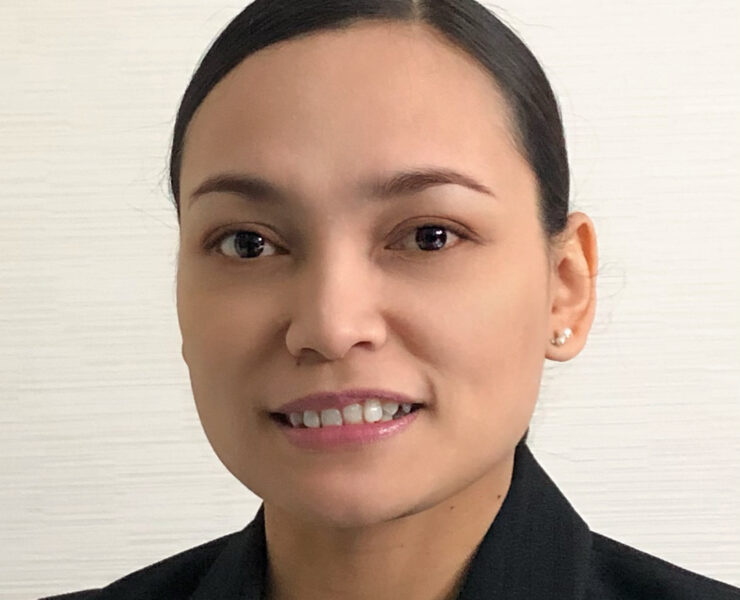
Wendy Kanna of Takeda Pharmaceuticals believes in coming together—as a team, a company, and an industry—around the common cause of cybersecurity in healthcare

Jeff Petet ensures that Upstream Rehabilitation has the right technology in place to support its tremendous growth trajectory