
Healthcare rarely lacks technology. What it often lacks is connection.
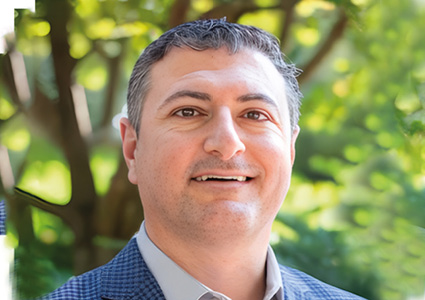
For Baha Zeidan, CEO and co-founder of Azalea Health, that has been the central challenge throughout his career. Leading a company that develops electronic health records, practice management, and revenue cycle solutions for ambulatory clinics and rural hospitals, he spends his time focused on a question that sits at the center of modern healthcare: how can technology reduce complexity instead of creating more of it?
The question is personal. Before founding Azalea Health in 2008, Baha worked for a medical laboratory company where he saw firsthand how healthcare organizations were adopting digital systems during the push toward electronic records. What should have simplified operations often had the opposite effect.
As he recalls, “Physicians during the rush to meaningful use were buying solutions. They had financial solutions, and they had solutions for their labs and clinical workflows. It was clear to us that there was a lot of data fragmentation. The complexity of those solutions created real and costly problems.”
That experience shaped both Baha’s career and Azalea Health’s direction. Today, as CEO, he’s responsible for the company’s strategy, product vision, and customer relationships. He works closely with providers as they navigate financial pressures, workforce challenges, and increasing demands for care delivery.
Why does healthcare still struggle with disconnected systems?
The challenge isn’t a shortage of software. Azalea Health began with a mission: to help underserved healthcare providers improve patient care and profitability. We designed solutions for clinicians and end users that work across ambulatory and hospital settings, providing a complete view of patient care and the financial tools to sustain and grow their businesses.
The issue begins with fragmentation. When information lives in separate systems, we spend time searching for data instead of acting on it.
My brother is a clinician, so I see this problem through his eyes. It’s tough for providers to get a complete picture of a patient’s health. That’s why ordering extra tests or procedures happens so often; piecing together a patient’s full medical history is just plain hard.
The consequences go beyond efficiency. For example, when a patient has cancer, delays in scheduling additional tests can cause real problems and financial hardship. Repetitive work is common in healthcare because of data fragmentation. We believe a connected solution can address these issues and give providers a full view of each patient’s history.
That belief has driven our development at Azalea, especially for ambulatory, rural, and community-based providers where staffing and budgets are tight.
What does simplicity look like in practice?
Healthcare is more data-driven than ever, but the user experience needs to be simpler. We build solutions that are both cloud-based and easy to use, because providers deserve a streamlined workflow.
I’m passionate about simplicity, and that’s why we focus on bringing AI into Azalea Health. We want to reduce workloads and give people easier access to the information they need.
We’re not here to add another application or dashboard. Our goal is to transform how users interact with technology. Traditionally, software asks users to figure out where to enter information and which screen will show results. Imagine being able to just speak to your software and get value instantly, instead of searching for the right screen or field.
Where is healthcare technology heading?
The next wave of healthcare software will go beyond documentation and become a true operational partner. Software is shifting from a system of recording to a system of action, almost like having a teammate who helps capture the right information and ensures you get what you need, when you need it.
That vision shapes our ongoing work with AI and workflow automation. Over the next two years, I see software taking on more tasks for providers, freeing up time for patient care. EHRs have become too complex, and physicians spend too much time on rigid documentation as a result. Now, AI can handle much of that work quickly and efficiently. I’m also focusing on developing AI that acts on what’s actually discussed between providers and patients.
I imagine software that automatically initiates actions we discuss during consultations. If I talk with a patient about lab work, an agent will create the lab order and remind the patient where to go. When the results come back, the agent analyzes them and shares the important details with both me and my patient.
We use this approach in administration and reimbursement, too, areas that demand significant time and resources. Our agentic software helps billers expand their capabilities. These advances will soon lead all of us – patients, clinicians, and administrators – to work more efficiently.
What should healthcare leaders prioritize?
When we evaluate technology investments, I always point out that trying to solve problems in isolation often leads to more complexity. It’s important to prioritize solutions that address multiple needs, not just one. Working with a single vendor who offers a complete solution helps prevent fragmentation.
We should look beyond current requirements when choosing technology partners. You need a partner who listens and keeps delivering solutions for the future, not just today. That philosophy guides my leadership. I always highlight the importance of understanding providers, administrators, and patients. I believe technology decisions start with knowing what people need and removing barriers between them and the information they require.
What comes next for healthcare?
Shifting expectations are accelerating the pace of change. Patients expect faster access to information. Providers want technology that feels as intuitive as consumer apps. Younger providers don’t want to spend weeks learning a new solution. Patients want to access care right away, learn about their conditions, and engage with their providers instantly.
As expectations evolve, we all use smartphones, technology, and AI to make life easier in other areas, so why not in healthcare? I believe providers and patients alike will continue to demand faster, simpler ways to access and use data.
If I could tackle one issue first, it would be revenue cycle complexity, which accounts for about 30 percent of clinical costs due to claims processing and reimbursement. My top priority is to lessen that burden so providers can get paid fairly for their work.
My second focus is patient education; empowering people with the knowledge and guidance they need to understand their conditions. These priorities might sound simple, but they highlight the core of both my leadership and Azalea Health’s strategy: making it easier for people to access, understand, and act on what matters most.
Baha Zeidan
www.azaleahealth.com
Passion, and excitement Azalea Health provides an integrated, AI-enabled SaaS healthcare platform that helps ambulatory and rural healthcare clinics and hospitals streamline clinical, operational, and financial management. The platform brings together EHR, practice management, revenue cycle management (RCM), patient engagement, analytics, telehealth, and workflow tools to simplify day-to-day operations, reduce administrative burden, improve financial performance, and give providers more time to focus on delivering quality patient care.