“You miss every shot you don’t take.”
Marc Joiner does not treat that as just a slogan. It shapes his decisions and guides his career. Today, it forms the foundation of his work as Co-founder at Pete Pharma, where he leads pharmaceutical compounding in a new direction.

He does not operate in a settled market. He is helping pharmacies rethink how personalized medicines are manufactured, moving from labor-intensive manual processes to digitally controlled pharmaceutical compounding. Change like this requires boldness, not caution. “You just got to go and do it. Just go do it,” Marc says.
From field to pharma
Marc started his career as an internal auditor, but not for long. “It was very rigid. I was not really into it,” Marc remembers. The structure did not hold his interest, so he moved into sales and soon entered pharmaceutical compounding. There, the environment felt completely different. It was more independent, with decisions made closer to the work and outcomes tied directly to how things got done.
Marc joined Medisca and spent his days directly inside compounding pharmacies, not behind a desk. He built his territory by working directly with pharmacists who produced customized medications. That experience shaped his view on adoption: ideas only matter when they work in real-world situations.
With over a decade of working with compounding pharmacies across North America, Marc launched another innovated novel technology that fundamentally changed pharmacy workflows globally. That experience gave him a front-row seat to both the opportunities and inefficiencies within traditional compounding and ultimately led him to believe the industry’s next major leap would come through pharmaceutical 3D printing.
Decisions in motion
Working closely with pharmacies shaped how he approaches decisions and how quickly he makes them. He developed this perspective by observing leadership decisions in practice and working under someone who gave him the freedom to act. “My manager at the time always said, ‘If you have an idea and you can back it up, then go for it. If that is what you want to do and you think that is what the market wants, then lets us go for it,’” Marc recalls. His manager did not need every little detail.
He carried that lesson into his leadership style and decision-making. Today, he does not wait for certainty; he acts on what he sees. “A lot of the time, organizations get bogged down by the what-ifs before doing anything. By the time they act, the opportunity is gone because they overthink instead of just doing it,” Marc points out.
For Marc, leadership and execution go hand in hand. He does not create teams just to avoid mistakes. He builds teams that take action. “I would regret not taking a shot more than I would regret failing. That is what keeps me up at night.” His philosophy drives decision-making. Teams act with enough information and test ideas in the real world.
Revenue tied to use
Most organizations serving compounding pharmacies are B2B distributors and sell high capex equipment upfront and generate ongoing revenue through consumables. The transaction ends the relationship. Pete Pharma takes a different approach, focusing on long-term partnerships instead of ending the relationship at the point of sale. “Unlike traditional B2B equipment manufacturers and suppliers, Pete Pharma’s success is directly tied to the success of our partner pharmacies. Rather than relying on consumable sales, the company generates revenue through long-term partnerships, formulation development, and ongoing innovation. If a printer sits idle, Pete Pharma doesn’t succeed either.” Marc notes.

That structure changes the historic dynamic of compounding pharmaceuticals. “It does not benefit Pete Pharma if a partner purchases a printer and it just sits there, as our revenue depends on the pharmacy actually using the printer.”
Installation is not the endpoint. It is where the work begins. “The team stays involved, helping partners adapt workflows, train staff, and compound medications using our technology.” Another distinction is not locking partners into fixed systems. “We will partner with a pharmacy to design or develop anything they want, but we never require you to use our proprietary products. It is a true partnership,” he highlights.
The 3D shift
Pharmaceutical 3D printing may still be emerging in the US, but it is not new. When Marc began looking for the next phase of innovation, he found the technology was already further along in Europe. “Believe it or not, 3D printing has actually become more adopted within pharmaceuticals in Europe than in the US. Europe has a lot of 3D printing within pharmaceutical dosing. That early adoption has largely been driven by clinical research, with European companies developing and validating the technology in controlled settings,” Marc explains. Pete Pharma is now building on that foundation, focusing on how those proven capabilities can be translated into scalable, day-to-day use within compounding pharmacies across North America.
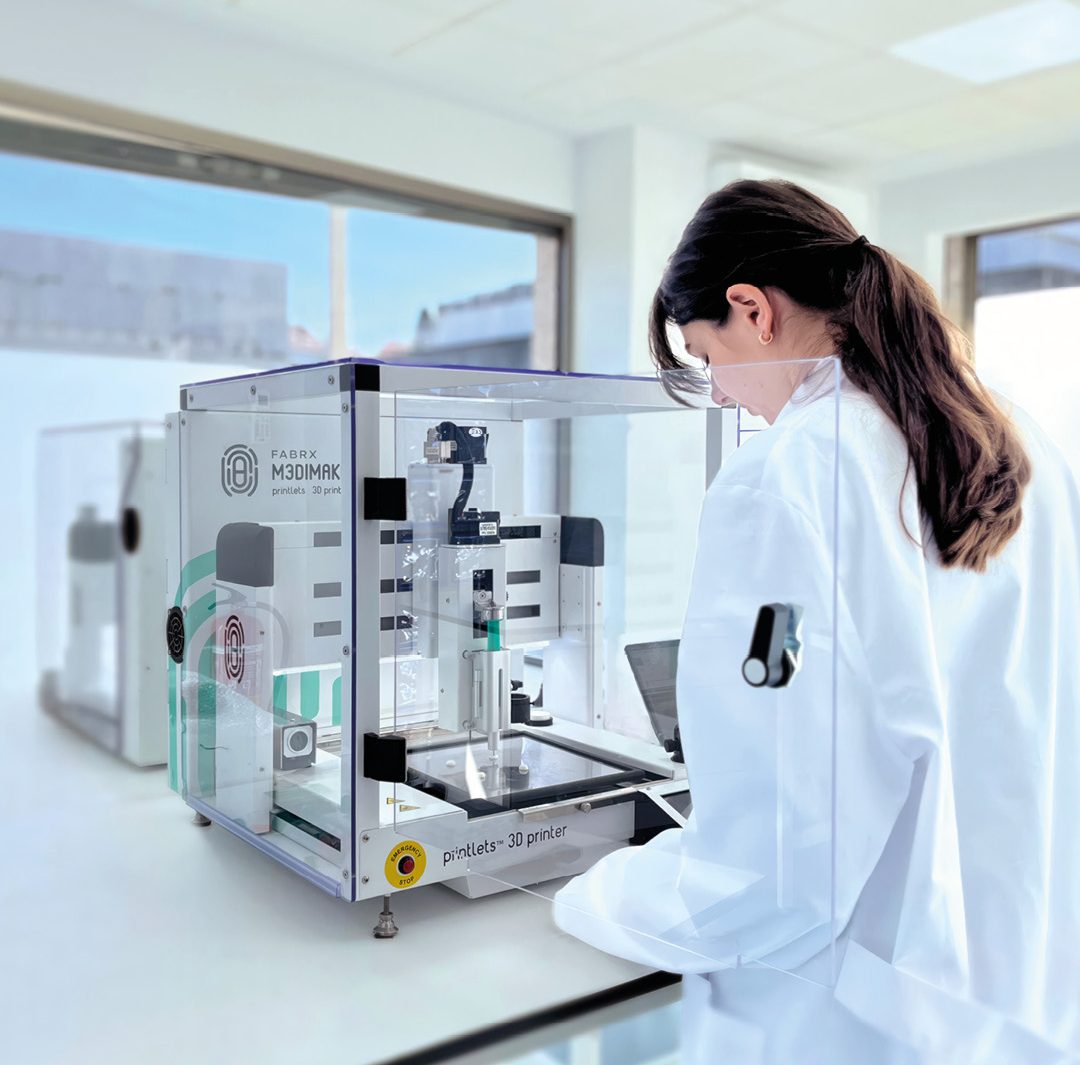
3D printing is already changing how medication gets made. In many cases, compounding still relies on manual processes. Hormone replacement therapy is one such area. It has high demand, repetitive steps, and time tied directly to labor. “Right now, it is a very manual process. You mix it, then fill capsules by hand. It takes about 45 minutes and requires a lot of cleanup,” he notes.
“Through 3D printing, a customer can produce 300 dosage forms in under ten minutes, and every single individual dose as a precise weight.” The distinction is not just about speed. It is about how quality is handled. Instead of testing samples and assuming consistency, the printer weighs each unit as it is produced.
3D printing has broadened what partners can offer. “Now, you can create a bi-layer tablet, where one part is immediate release and the other is sustained release. Before this technology, compounding pharmacies could only do one or the other, not both in a single dosage form.”
The process streamlines preparation, reduces handoffs, and creates a more consistent production process. “Partners will be able to purchase pre-formulated cartridges and print right away, so they no longer have to prepare and quality-check formulations before production.”
Scaling adoption
Marc does not view pharmaceutical 3D printing as a distant prospect. He believes it will become mainstream. “Over the next five years, I believe pharmaceutical 3D printing will move beyond the early adopter phase and become a standard tool for many compounding pharmacies.” Marc predicts it will change how compounding pharmacies operate daily. Instead of relying on manual labor, partners can use equipment that scales according to demand. “Instead of having ten people making things by hand, you will have ten 3D printers managed by one person, moving production closer to the point of care.”
The transition to 3D printing in pharmaceutical compounding will not happen overnight. Technology is already in place, and early adopters are beginning to embrace it. “As with any innovation, adoption follows a pattern. Those who are willing to move first are already looking ahead, while others will follow as the benefits become clearer. As the landscape continues to evolve, broader acceptance will come, with the wider market increasingly viewing 3D printing as part of standard practice,” he reflects.
For Marc, the goal has never been simply to sell another piece of equipment. It’s to fundamentally change how compounded medicines are made.
That requires taking risks, challenging conventional thinking, and continually asking what could be done better.
“You miss every shot you don’t take,” Marc says. For Pete Pharma, that shot is already changing the future of pharmaceutical compounding.