As healthcare moves beyond the hospital, systems are rethinking how care continues after discharge. Infusion therapy has become a critical part of the transition, with patients leaving acute settings on treatment plans that demand coordination across home and outpatient care. Ensuring continuity without fragmentation is now a priority for health systems navigating that shift.

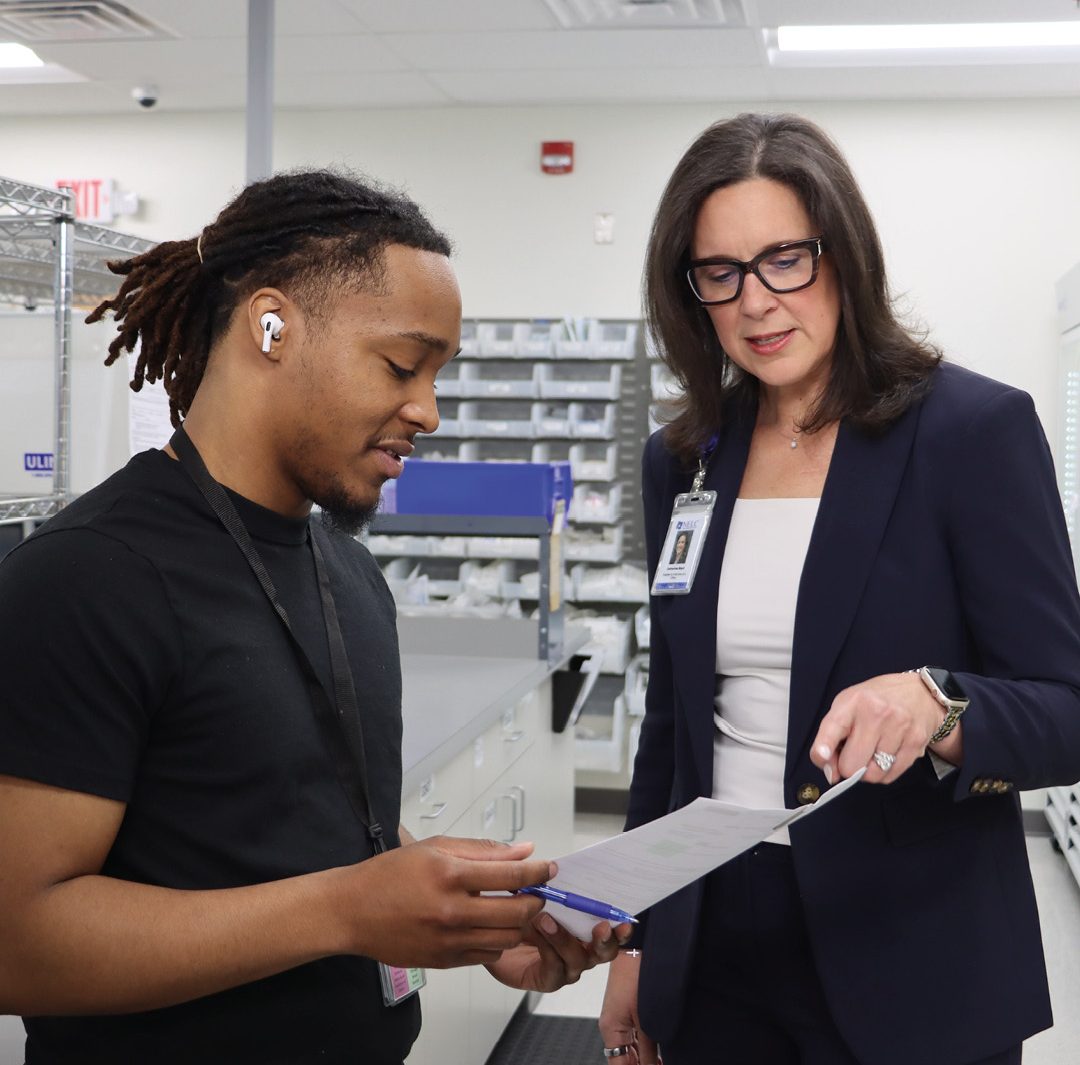
At New England Life Care (NELC), Catherine Boyd and Jeni Shields manage that change through a structure established, decades earlier. Catherine, President and CEO, directs enterprise strategic efforts and growth with operational reliability and quality through clinical and operational performance while shaping long-term strategy with hospital members. Jeni, Chief Business Officer, leads growth, partnerships, and service development across the network. Together, they guide an organization spanning northern New England while staying connected to the hospitals that formed it nearly 40 years ago.
“NELC is a nonprofit home and alternate site infusion provider founded in 1987 by a group of hospitals who recognized patients in rural and underserved communities struggling to access high-quality infusion care after discharge,” Catherine explains.
The founding mission of NELC continues to shape how the organization expands, coordinates, and delivers care as demand for infusion services – including nutritional, anti-infective, chronic disease, immunosuppressant, and pain management treatments – grows beyond hospital settings.
Shared foundations
NELC’s cooperative structure enables an economy of scale across the membership sharing resources both operational and financial that reduces total cost of care. The cooperative structure guides governance and priorities across the organization. “The cooperative foundation still defines who we are today. NELC is owned by and accountable to our hospital members, which means our priorities align with the needs of patients, healthcare providers, and health systems, not shareholders,” Catherine notes.

Over time, NELC’s relationships with member hospitals have become embedded in daily operations, shaped by long-standing partnerships. “Our relationships are built on collaboration, transparency, and shared purpose. Many of our members have been with us for decades, so we evolve with them as valued partners to understand the operational and clinical challenges hospitals and their systems face,” Catherine observes.
That same foundation directs how leadership approaches the organization’s work. “I was drawn to healthcare because it’s one of the few industries where what you do truly shapes whether someone can live well, recover at home, or stay connected to their family during one of the hardest periods of their life,” Jeni says. The same logic shapes how she frames NELC’s role within the healthcare system. “NELC isn’t a company selling services to hospitals. We are the member hospitals infusion arm delivering services in ways that preserve access, quality, and patient experience across New England,” Jeni reflects.
The distinction matters as it shapes the organization’s approach to growth. Rather than expanding independently, NELC grows alongside its members, aligning service development with clinical and operational priorities across hospital systems. Catherine remarks, “Leading an organization built because nonprofit hospitals chose to work together and staying true to this purpose for nearly four decades is a privilege.”
Integrated care flow
NELC serves patients across multiple states and coordinates care from hospital discharge to home and outpatient infusion. On this scale, the organization must balance consistency with local connection. “As NELC has grown across six locations in northern New England, we have remained intentional about preserving the personalized, patient-centered approach that has defined the organization since its founding,” Jeni comments.
NELC maintains consistent clinical standards and lets local teams respond to patient needs. “Our model combines standardized clinical excellence with individualized patient support,” Jeni explains. The consistency enables local teams to focus directly on patient relationships. “We maintain consistent quality, safety, compliance, and care coordination practices across the organization, and we empower our local teams to build strong relationships with patients, caregivers, referral partners, and hospital members.” NELC identifies patients as soon as infusion therapy is introduced, using a centralized model to guide next steps. “Our Care Coordination Resource Center (CCRC) is a centralized patient throughput model. It’s a unique, proactive approach embedded early in the patient journey, when the healthcare provider requests infusion services for their patient’s care plan,” Jeni describes.
Early coordination allows NELC to align its teams with hospital workflows before discharge. Rather than introducing a separate process, the organization integrates into established systems. “In practice, we work closely with case management, pharmacy, and clinical teams to align patient identification, discharge planning, and therapy management. Our goal is to fit into their workflows so the transition to home feels seamless,” Jeni states.

Coordination continues after patients leave the hospital. Teams maintain contact across settings to support their therapy and follow-up care. Jeni highlights, “The collaboration continues with providers in the community regardless of where the patient originated. Ultimately, it’s about coordination and partnership; making sure we’re an extension of their team and supporting smooth, consistent care for patients as they move out of the hospital.”
The level of coordinated care delivery reflects the organization’s structure and loops back to the cooperative model itself. “For hospitals, the cooperative structure provides a partner who understands the realities of healthcare delivery,” Catherine observes. The alignment extends beyond governance into NELC’s broader network of partners. It shapes how the organization collaborates not only with member hospitals, but with suppliers and manufacturers. “For suppliers and manufacturing partners, the model creates stability, patient access, and meaningful clinical engagement. NELC has long-standing relationships with leading health systems and clinicians throughout New England, allowing for collaborative approaches to therapy management, patient support, and responsible utilization,” Catherine adds.
Leadership in practice
Catherine’s leadership approach reflects her clinical background in emergency and intensive care alongside her operational experience. “One of the biggest lessons we’ve learned is that delivering highly specialized care across a broad geographic footprint requires intentional infrastructure, strong communication, and a culture built on accountability and connection,” Catherine reflects.
NELC operates with a hybrid workforce that includes a large proportion of remote employees. “We’ve implemented tools that keep teams connected in real time; from electronic health records and care coordination platforms to centralized workflows supporting scheduling, documentation, compliance, and patient monitoring,” Catherine explains.
Maintaining consistency across locations demands coordination across teams and systems. As Catherine notes: “Operationally, we’ve focused heavily on standardizing processes and clinical protocols across the organization so that patients receive the same high-quality experience regardless of location.”
Maintaining that consistency across a distributed workforce needs regular communication to keep teams connected and aligned. “Frequent communication, virtual town halls, leadership visibility, and cross-functional collaboration have become essential to ensuring employees remain connected to both one another and our mission,” says Catherine.
Operational and growth focus
Where Catherine focuses on operational infrastructure, Jeni approaches leadership through growth and partnership: “At NELC, growth has always been tied directly to expanding reach, improving outcomes, and strengthening the communities we serve.”
Growth decisions at NELC are guided by a defined framework that balances patient access with long-term sustainability. “We evaluate growth opportunities through two lenses: whether they improve the patient experience and access to high-quality infusion and specialty pharmacy care, and whether they reinforce long-term sustainability so we can continue investing back into our patients, employees, and member health systems,” Jeni explains.
The framework extends to shape how resources are allocated across the organization, linking financial performance directly to reinvestment in care and infrastructure. “Because we are not driven by shareholders, we can reinvest resources into areas that matter most: charitable care, clinical innovation, patient support programs, technology, and workforce development,” Jeni points out.
In this context, growth is not treated as an isolated objective but as part of the organization’s broader mission. Jeni comments, “Responsible growth gives us the resources and stability to deepen our impact, expand access, and continue fulfilling the cooperative mission that has defined NELC from the beginning.”
Value and access
NELC measures performance through employee, patient and member hospital engagement and outcomes rather than financial returns, defining value based on enhanced operational excellence, expanded services, improved member and provider experience, increased patient access for the most complex and vulnerable populations and enhanced status as an employer of choice. “Long-term value, in our model, is measured by what we return to our member hospitals and their communities, not by margin extracted from them,” Jeni observes.

At NELC, financial performance is structured to support member hospitals rather than external stakeholders. “In our cooperative, surplus stays with our members, giving us the capacity to grow alongside them rather than at their expense,” Jeni notes.
The reinvestment model is most visible in one commitment: charitable care, which is central to how NELC delivers on its purpose. Catherine affirms, “Our charitable care commitment is one of the most direct expressions of who we are as a cooperative.”
Behind that commitment sits a structured process that prioritizes clinical need and access gaps; decisions focus on sustaining therapy where coverage falls short. “We deploy charitable care where it most directly preserves access to life-sustaining therapy: patients who are uninsured or underinsured, those who fall into coverage gaps, and complex cases where reimbursement falls short of the true cost of care,” Catherine explains.
The effect of that support is most evident in-patient outcomes, ensuring continuity of care that might otherwise be disrupted. “The impact is most visible at the patient level, individuals who can remain on therapy, recover at home, and avoid readmission because cost did not become the barrier,” Catherine highlights. The continuity strengthens the role of member hospitals by supporting discharge and ongoing care beyond acute settings. “That is the cooperative model working as it was designed: hospitals pooling resources to extend care into communities where investor-owned infusion providers often will not go,” Catherine adds.
The same coordinated model extends into relationships where clinical integration and patient support intersect. “For manufacturing and supplier partners, NELC offers established clinical infrastructure, deep patient relationships, and a coordinated approach that spans infusion, specialty pharmacy, nursing, nutrition, and care management,” Jeni says. Such partnerships are built over time, supported by continuity with both providers and patients. “What makes the NELC partnership particularly valuable is the level of trust we’ve built with both providers and patients over decades. Our health system partnerships create strong clinical integration and allow therapies to be delivered within a coordinated continuum of care rather than through fragmented channels,” Jeni adds.
Looking ahead, the focus will be on the forces reshaping how infusion care is delivered across the system. “The next 12 to 18 months will be defined by three pressures converging at once: continued site-of-care migration out of the acute care hospital setting, intensifying financial strain on health systems, and an increasingly active regulatory and reimbursement environment for specialty and infusion therapy,” Catherine says. As those dynamics evolve, the shift toward home and outpatient care continues to gain pace, driven by both system priorities and patient expectations.
“Site-of-care shifts will accelerate. Payers, CMS, and patients themselves are pushing more infusion and specialty care into the home and outpatient settings,” Catherine says. The shift does more than expand where care happens. It changes what is required of providers operating within it. “There is real opportunity to expand quality patient-centered infusion access, but only if the providers receiving that volume are clinically capable and aligned with the health systems coordinating the patient’s care,” she adds.
Financial pressure is reshaping how hospitals evaluate services and partnerships. “Workforce costs, capacity constraints, and reimbursement compression are pushing health systems to be more deliberate about which services they own, which they partner on, and which they exit,” Catherine says. That pressure is changing the role of external providers. Cooperative models let hospitals maintain governance and clinical oversight without going it alone. “Cooperative and mission-aligned partnerships will become more valuable because they let hospitals share clinical capability without surrendering control or community accountability,” Catherine says.
For Jeni, the mission behind all of it stays personal. “Every day I get to work on behalf of patients I will never meet, alongside member hospitals and a team that genuinely believes the cooperative model is a better way to deliver care,” she declares. In a landscape defined by change, that focus continues to shape how NELC connects care delivery to the patients, members and communities it serves.