“Being good stewards of the healthcare dollar means making every dollar count. We have a responsibility to make sure resources reach the members who need them and translate into the care and services that improve their health.” For Miguel Varela Miranda, that commitment sits at the heart of healthcare compliance.
As Deputy Chief Compliance Officer at L.A. Care Health Plan (L.A. Care), he oversees regulatory compliance, delegation oversight, and program integrity for a health plan that serves more than 2 million members across Los Angeles County. His role spans relationships with regulators, oversight of contracted organizations, enterprise compliance initiatives, and governance structures supporting healthcare delivery. Yet, he rarely describes the role in technical terms. Instead, he shares stories about trust, accountability, and doing what’s right.
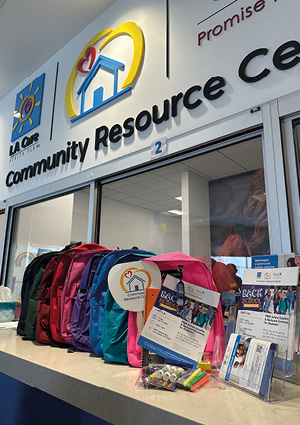
Those principles shaped a career that began in law, evolved through healthcare operations, and ultimately led him to an organization dedicated to serving communities that often need healthcare support the most. “This is a place where the focus is on underserved communities. We’re not focused on margins. We’re focused on healthcare and making sure our members receive the same level of care as people in more affluent communities.”
Mission to care
Purpose came first. Compliance followed: “I was really searching for an area where I could both leverage my legal skill set and work in a space that felt more meaningful to me.” He worked across legal, operations, and provider relations before joining L.A. Care, gaining direct experience with the industry’s operational and regulatory challenges.
L.A. Care offered something he had been looking for throughout his career: the chance to apply the discipline of compliance in service of communities that often face barriers to care. While it may operate behind the scenes, its influence extends into every part of a healthcare organization. Decisions about policies, controls, oversight, and regulatory interpretation all shape how services are delivered and how resources are managed.
He discovered the answer had less to do with regulations and more to do with the standards an organization sets for itself. “Having the discipline to make sure the organization I work for abides by the standards, does the right thing, and shapes a culture where the moral compass stays at the forefront of everything we do. That’s why healthcare compliance matters to me.”
For Miguel, compliance isn’t just a function. It’s a way of defining how an organization acts when no one is watching. Regulations matter, but culture drives how a company responds when challenges arise. “Doing the right thing stays top of mind for our organization and our executive leadership. It’s truly an honor to work at L.A. Care and be part of a team always focused on doing what’s right.”
Every decision carries extra significance when the resources being managed support communities that depend on them most. That sense of obligation, protecting public money as carefully as private capital, guides both strategy and daily operations across the organization.
Building trust
Healthcare regulation keeps evolving at both the state and federal levels, creating challenges for health plans, providers, and partners. Miguel sees education as the starting point, helping people understand requirements before implementation begins. His team distills complex regulations for business units: “When we receive those regulations, we convert them into something digestible and that business units can clearly understand what’s required.”
Clarity matters because these expectations stretch beyond L.A. Care’s four walls. The organization works closely with providers, vendors, and delegated entities who must also meet regulatory expectations. “Once we have that clarity, we can have more intentional conversations about how to best position the organization to comply with the law. It’s important for L.A. Care to make sure not only our organization, but also the organizations we contract with, understand what’s required.”
Trust grows the same way compliance does: through consistency, credibility, and transparency. We regularly meet and keep open channels with our regulators. It’s really important for us to keep transparency at the forefront of our interactions.”
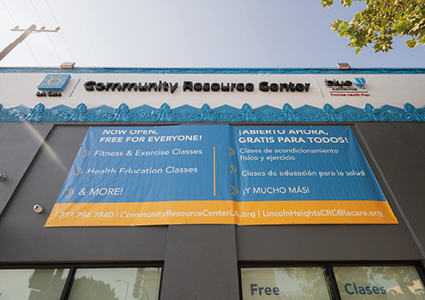
Strong relationships matter most when regulation shifts or new questions emerge. Keeping those lines of communication open helps organizations respond more effectively and maintain trust with everyone involved.
That same focus on trust and transparency extends into the broader healthcare landscape. Miguel describes healthcare delivery as a collaborative space where health plans, providers, hospitals, and community organizations all influence outcomes. “We share a common responsibility to strengthen the safety net and ensure our members get the care they need. Strong partnerships make that possible, and when the safety net is stronger, our members and communities are stronger. That’s a success we all share.”
Guiding the future
Few developments have attracted as much attention as AI. For Miguel, AI brings both opportunity and responsibility. Its potential applications touch claims processing, analytics, and administrative operations. At the same time, healthcare organizations need to ensure proper governance, oversight, and accountability. “One of the biggest areas where we’ve seen changes is in AI. We want to make sure we’re leveraging AI but doing so mindfully and with the right guardrails and controls.”
Innovation may move quickly, but accountability always matters. “The partnership between compliance and technology, especially with our Chief Information Security Officer, is deeply ingrained at L.A. Care.” The organization has set up governance structures to evaluate how it uses AI and reviews outputs. “We have a strategic roadmap that focuses on use cases in a disciplined way and adopted human-in-the-loop (HITL) AI protocols, which means human judgment is integrated into the AI workflow to enhance accuracy, safety, and ethical decision-making. This helps us ensure the final output has gone through several different reviews to confirm it’s not hallucinating or using incorrect information.” Bias remains a top focus, especially in healthcare where decisions affect access, outcomes, and patient experiences. “Bias, especially in healthcare, is an important consideration. We want to make sure the model is always trained to use the most ethical approaches.”
Technology may change the work, but it doesn’t remove the need for judgment. Miguel leads a compliance organization of about 75 professionals and places a strong focus on development and growth. He believes investing in teams is inseparable from building high-performing organizations. “If we want the best, we’ve got to provide that development pathway for our team.”
As technology reshapes healthcare, he sees curiosity becoming a key leadership trait. “I think curiosity is critical in this space. We need the next generation to be very curious.”
The pace of change may pick up, but the principles behind the work stay the same. Whether the conversation is about regulation or technology, Miguel returns to one mission: helping organizations make decisions that serve the people who count on them most.
Readily
Readily is the AI-native healthcare compliance platform built for managed care. It helps organizations close compliance gaps in real time as regulations change. At L.A. Care Health Plan, Readily aggregates audit information, keeps audit tool requirements current, and compiles results and findings — so reviewers verify in seconds instead of digging for hours. Readily helps health plans, state agencies and delegated entities stay continuously audit-ready, cut manual tracking across disconnected systems, and expand program coverage without adding headcount. Supporting organizations responsible for 25 million covered lives across 46 states, Readily’s aim is to lift the manual burden of compliance off people’s shoulders — freeing the experts who protect these programs to focus on judgment over paperwork.
www.readily.ai