In everyday clinical practice, signs usually show up before a diagnosis. One patient comes in with resistant hypertension. Another deals with fatigue that never goes away. A third has trouble focusing on work or school. These cases circulate through primary care, cardiology, endocrinology, psychiatry, and pediatrics all the time. Yet sleep almost never takes center stage in the diagnostic process, even when symptoms suggest it should. It leads to care pathways that treat the effects while the root cause often remains untested.

For health systems, the gap impacts utilization, costs, and outcomes. Patients move through visits, medications, and referrals. Employers notice more injuries and lost productivity. Families experience academic and behavioral challenges. Meanwhile, the diagnostic pathway for sleep apnea still follows an old model built around specialist access, lab capacity, and reimbursement structures that favor centralized testing. As care delivery shifts toward distributed models and home-based monitoring, the challenge is to expand access while upholding clinical standards.
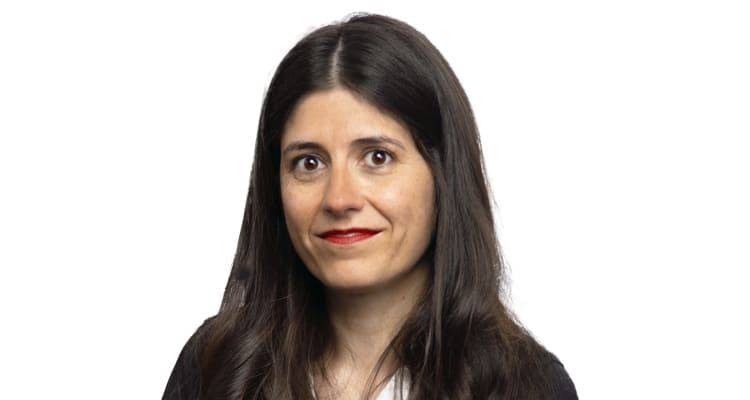
Hidden in plain sight Professor Esther Rodriguez Villegas, a leading sleep apnea expert and founder of medtech startup Acurable, views underdiagnosis as a systems problem, not a patient awareness problem. “Sleep apnea remains chronically underdiagnosed in North America because diagnostic
pathways have not kept pace with either the true prevalence of the condition or the diversity of how it presents across the population,” the Professor observes.
She highlights the scale of the gap between prevalence and diagnosis. “Conservative estimates suggest that more than 25 to 30 million adults in the US have obstructive sleep apnea, yet only around 20 percent of moderate-to-severe cases are formally diagnosed. In practical terms, four out of five people live without a diagnosis,” the Professor points out.
She frames the issue as structural rather than behavioral. “When a condition is this common yet so rarely identified, the problem is not individual awareness but a structural failure in our diagnostic pathways,” she adds.
In clinical settings, suspicion often sticks to a narrow set of symptoms. “A key driver of underdiagnosis is the continued reliance on a narrow clinical archetype. Sleep apnea has historically been associated with loud snoring, witnessed breathing pauses, and excessive daytime sleepiness in middle-aged men,” the Professor notes. She contrasts that with what clinicians see every day. “In practice, symptoms are often subtler and less specific, like persistent fatigue, unrefreshing sleep, headaches, mood changes, or trouble concentrating,” the Professor explains.

She describes how these complaints get redirected. “Providers often attribute them to stress, aging, mental health, or lifestyle factors in busy primary care settings,” she observes.
The effects of the mismatch vary across patient groups. “Women and younger patients feel the disconnect more acutely, though they’re not the only ones affected,” the Professor points out.
She explains how symptom profiles differ. “Women with sleep apnea are less likely to report classic symptoms like loud snoring, and more likely to present with insomnia, anxiety, depression, or daytime fatigue without obvious sleepiness,” she says.
She highlights how younger adults interpret symptoms. “Younger adults might notice trouble focusing or lower performance at work, but don’t always realize they could have a sleep disorder,” the Professor adds. She connects these patterns to delayed testing. “In both groups, clinicians have a higher threshold for suspicion, and referrals for testing often come late or not at all,” she observes.
Who gets missed Pediatric care introduces another layer of complexity. “Children represent a particularly serious and under-recognized dimension of this problem,” the Professor notes. She points out that children’s symptoms often look different from what adults expect. “In pediatric populations, sleep-disordered breathing shows up not as sleepiness, but as hyperactivity, impulsivity, irritability, emotional ups and downs, or learning difficulties,” she explains.
She highlights how this creates diagnostic confusion. “These symptoms closely overlap with behavioral and neurodevelopmental diagnoses, especially ADHD, which increases the risk of missing an underlying sleep disorder during critical periods of development,” the Professor adds.
She cites system design as a contributing factor. “Structural issues reinforce these blind spots. Diagnostic pathways stay centralized, specialist-driven, and tied to legacy reimbursement rules that require referrals to sleep specialists or accredited labs,” the Professor explains.
She notes how incentives affect behavior in primary care. “General practitioners face both administrative and financial disincentives to start testing, while dentists – despite their ability to spot sleep-disordered breathing – are often left out of the diagnostic process,” she observes. Barriers to access compound the problem. “Long waits for specialists, geographic challenges, and fragmented care pathways make it even less likely that patients with non-classical symptoms get a formal diagnosis,” the Professor adds.

The clinical consequences stretch far beyond sleep clinics. “Clinically, untreated sleep apnea links to hypertension, coronary artery disease, stroke, heart failure, type 2 diabetes, depression, cognitive decline, and a higher risk of dementia,” the Professor observes.
She highlights the impact of ongoing physiological stress. “Repeated sleep fragmentation and intermittent low oxygen levels speed up the development and progression of chronic diseases. Patients with undiagnosed sleep apnea use healthcare services more often and rack up higher medical costs,” the Professor points out.
The economic impact goes well beyond healthcare budgets. “From an economic perspective, the effect is substantial. Current US estimates put the annual societal cost of undiagnosed and untreated obstructive sleep apnea at about $150 billion, including direct healthcare costs, lost workplace productivity, and more motor vehicle and occupational accidents,” she explains.
She highlights a key risk area. “Motor vehicle accidents alone account for several billion dollars each year,” the Professor continues. She ties this to functional impairment. “Chronic sleep deprivation impairs concentration, decision-making, and reaction time, contributing to absenteeism, presenteeism, and workplace injuries,” she notes.
At the population level, she sees underdiagnosis as a preventable burden. “On a broad scale, widespread underdiagnosis leads to avoidable illness, disability, extra healthcare spending, and lost economic potential,” the Professor notes. She connects this to demographic trends. “If we don’t make progress with diagnosis and early intervention, factors like population aging and in-creasing obesity mean the burden will keep growing,” she adds.
Scaling diagnosis safely
She sees evidence-based home testing to solve capacity issues without removing specialists from the process. “Advances in evidence-based, at-home diagnostic solutions offer a real answer to the scale of underdiagnosis in sleep apnea,” the Professor observes.
She highlights that quality benchmarks still matter. “Only a limited number of clinically validated technologies have shown they match the accuracy of cardiorespiratory polygraphy, which remains the clinical gold standard for diagnosing obstructive sleep apnea at home.
“Some of these technologies go straight to patients without needing in-person supervision, thanks to their user-friendliness and built-in quality controls. In contrast, traditional polygraphy often needs special setup, patient instructions, and expert interpretation,” the Professor adds. She ex-plains the impact on scalability. “These practical hurdles make it tough to scale up polygraphy, even though it’s accurate,” she notes.
Looking at system design, she focuses on where diagnosis begins. “The main advantage of these clinically validated at-home diagnostic technologies is that they separate diagnosis from highly specialized, capacity-limited settings. By letting patients test themselves in familiar environments with minimal setup, these tools cut down barriers like travel, lost work hours, and long waits for specialists and diagnostic tests,” the Professor notes.
She points out the benefit isn’t limited to one group. “It matters especially for patients whose symptoms don’t immediately lead to specialist referral, like women and younger adults. Over time, these tools could offer similar benefits in pediatric care as evidence and regulations catch up. The benefit really extends across the whole population.”
She makes it clear that the approach doesn’t sideline specialists in care delivery. “At scale, these solutions expand diagnostic capacity without overwhelming specialist services. Specialist expertise still matters for complex cases and treatment planning, but it’s not needed for every diagnostic step,” the Professor observes. She also notes policy barriers. “This model won’t work if reimbursement structures stay misaligned,” she warns.
Finally, she stresses the importance of clinical safeguards. “We need guardrails. Not all home di-agnostic devices are clinically fit for purpose, and a modern diagnostic framework shouldn’t accept stated intended use as enough,” the Professor notes.
She cautions against uneven performance. “Devices with low predictive value, or those based on
physiological measures that don’t work well across all populations, could actually make underdiagnosis worse,” she explains.
She closes with a call for evidence-based policy. “Reimbursement models should draw a clear line between technologies that meet robust clinical standards – statistically equal to cardiorespiratory polygraphy – and those that don’t. We shouldn’t support widespread use of less accurate tools,” the Professor concludes