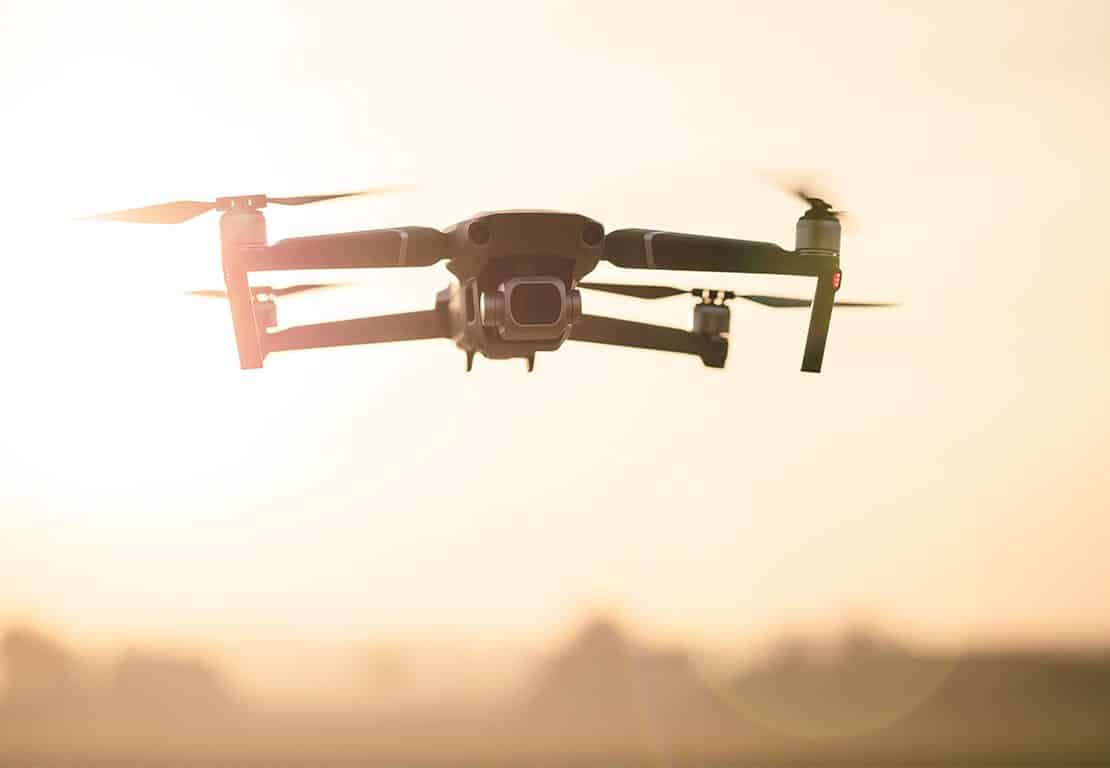
Autonomous drones transform healthcare with AI routing, real-time tracking, and cold-chain protection for nonstop hybrid deliveries.
Market projections indicate the US medical drone sector will expand rapidly. Analysts estimate the market will reach $84.99 billion in 2025 and grow to $286.81 billion by 2035, representing a 12.93 percent CAGR from 2026 to 2035. Supportive regulation, increased healthcare adoption, and coordinated investment from technology developers, logistics providers, government agencies, and health systems drive the growth. North America holds the largest share due to significant funding, mature health infrastructure, and supportive aviation frameworks in the United States and Canada.
Emergency blood logistics and vaccine transportation drive the highest demand. UNICEF and other organizations are expanding drone operations into remote and emergency environments. In the US, state-supported public-private partnerships design dedicated drone corridors between medical centers. In Canada, similar corridor models improve access in isolated areas, including Indigenous communities.
Technology developers focus on autonomous navigation, AI-supported routing, real-time tracking, and cold-chain protection within payload units. Rotary-wing drones dominate deployment because they take off vertically and land in confined spaces. Hybrid aircraft combine vertical lift with long-range capability, highlighting future potential. Gasoline generators eliminate battery downtime and enable refueling for continuous operations.
Hospitals are evaluating drone dispatch for automated external defibrillator (AED) delivery. Studies show average arrival times of about 5.21 minutes, compared to 22 minutes for ambulances in defined scenarios. Integrating smartphone dispatch systems can guide bystanders until emergency services arrive, shaping future adoption models.
Government agencies remain major users because drones support public health missions, infectious disease response, and access expansion objectives. Hospital demand continues to grow as facilities test UAV logistics for organ transport, blood product delivery, pharmacy distribution, and time-sensitive lab movement. Pricing trends show lower startup and operating costs than many traditional modes, as well as practical launch capability from rooftops and parking structures and manageable training requirements within regulatory frameworks.
Currently, healthcare leaders treat drones as core logistics infrastructure, not just symbolic innovation. As the FAA stabilizes rules and BVLOS operations become routine, operators such as Zipline, UPS Flight Forward, and Amazon Prime Air directly integrate drones into US healthcare logistics, achieving measurable performance, regulatory compliance, and supply-chain alignment.
Today, autonomous medical aircraft operate within clearer regulatory pathways as healthcare systems and aviation authorities formalize standards for routine transport. Hospitals use BVLOS approvals and FAA Part 135 certification to move medicines, blood samples, vaccines, and diagnostic materials through controlled corridors below 400 feet. Remote ID compliance, detect-and-avoid systems, and structured operations create predictable service. Health systems report reducing delivery times from hours to minutes and cutting costs by 30 to 50 percent compared to road couriers, especially in regions with long distances or poor infrastructure.
The FAA’s plan for broader BVLOS rules in 2025 and consideration of a Part 108 framework supports routine operations rather than isolated pilots. These rules define collision-avoidance expectations, pilot oversight standards, and aircraft reliability benchmarks. They enable scheduled healthcare delivery networks instead of case-by-case exemptions. Hospitals use these frameworks to maintain regular flows of sterile medications, cold-chain biologics, lab materials, and sometimes organs, integrating drone dispatch into logistics workflows instead of replacing ground systems.
Hospitals report that drones reduce variability caused by traffic and courier batching. Traditional couriers often wait to consolidate samples, which delays testing and treatment. Drones enable just-in-time transport of small payloads, stabilize turnaround times, and support laboratory and pharmacy planning. In rural areas, drones fly direct air routes rather than longer road routes, speeding up diagnostics and supply deliveries.
Zipline BVLOS networks
Zipline operates established medical drone networks in North Carolina and Arkansas through partnerships with systems such as Novant Health. With FDA and FAA approvals, its fixed-wing P2 aircraft supports routine healthcare transport. It reports success rates above 99.9 percent, delivers significantly lower emissions than vans, and focuses on regional access and hospital-to-clinic logistics. BVLOS authority enables regional routes and positions Zipline within broader hospital resilience planning.
UPS Flight Forward operations
UPS Flight Forward, operating under FAA Part 135 certification, integrates drones into UPS aviation and ground logistics. The subsidiary supports hospital campus deliveries, rural supply routes, and transport of sterile medications and, in select cases, donor organs. In 2022, UPS expanded its BVLOS operations with WakeMed Health in North Carolina, enabling hub-to-clinic logistics with temperature-controlled payloads. UPS applies aviation-grade scheduling, compliance, and airspace coordination, positioning drones as one component of a multimodal healthcare logistics system.
Amazon Prime Air trials
Although primarily consumer-focused, Amazon Prime Air has approvals to deliver medical payloads weighing up to five pounds and has tested hospital-adjacent operations in Texas and California. Amazon uses advanced detect-and-avoid systems and autonomous flight management to support urgent deliveries within defined service zones. Reliability exceeds 99.9 percent in approved operations. Healthcare leaders view the capabilities as a potential extension of pharmacy workflows, especially for maintenance medications, pending regulatory and partnership alignment.