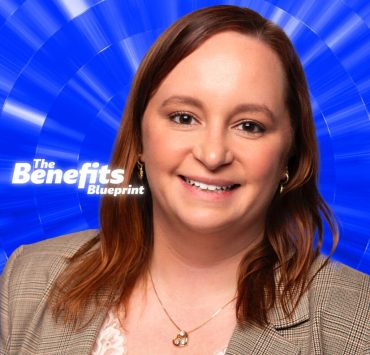
Paulette Olin ensures the “Global” in “Everest Global Services Inc.” applies to internal employee benefits and is committed to applying a consistent, global standard to employee benefits, reflecting the same level of excellence that is brought to the business’s operations.
The senior vice president and global HR operations and benefits leader at Everest strategically shapes the employee value proposition through competitive compensation, benefits, and wellness initiatives, building upon over two decades of experience within the organization. As leading the global total rewards function, she’s had to evolve with the company as it’s gone global and tackled the growing pains that can accompany that kind of expansion.
Olin has helped steer Everest from a US-centric company to a worldwide organization with a data-driven benefits strategy that asks employees to think differently about healthcare, costs, and their own long-term wellbeing.
“I love to learn and use that knowledge to enrich the lives of our employees by investing in their holistic well-being—physically, mentally, and financially.”
Paulette Olin
When she first joined Everest, the company headcount was only a few hundred employees, most of them in the US, and the benefits were reflective of that. But as the organization expanded into more countries, she and her team were challenged to understand each market’s regulations, social insurance structures, and cultural expectations around healthcare expectations and what truly mattered to employees.
“We want our employees around the world to have a consistent Everest experience when it comes to their health, wellbeing, and financial security,” Olin explains. “That’s required constant learning, and it’s meant that I’ve picked up new jobs over the years. I love to learn and use that knowledge to enrich the lives of our employees by investing in their holistic wellbeing—physically, mentally, and financially.”
When the organization realized its benefits spending was putting the long-term health of the company at risk, it asked Olin to try and find a proactive way for employees to be more mindful of their health and wellbeing. Everest walked away from its long-standing point-of-service medical plan, a traditional model with copays and coinsurance where cost increases were not sustainable, in the US.
“When you go to the pharmacy and pay $10 for a prescription, it can be easy to forget that the prescription may cost $600 a month,” Olin says. “We wanted to examine ways to get better health outcomes and help our employees become better consumers in the process and how education can be a big part of getting the right care.”
Everest moved to two high-deductible medical plans with a health savings account (HSA) option. The company didn’t leave it to employees to figure out this transition on their own. Everest committed to seeding the HSAs with employer contributions and to getting that money into the accounts quickly at the start of the year.
“If someone had a high claim early in the year, they’d have access to funds before they’d even had a chance to contribute to an HSA themselves,” she explains.
Everest contributes $600 for single coverage and $1,200 for family coverage. For 2026, the company is adding a new requirement for this HSA funding aimed at preventive care. Employees will need to obtain a routine physical to receive the company HSA contribution.
Alongside design tweaks, Olin actively guides employees to understand the power of their HSAs, highlighting its growth potential as a critical financial asset throughout their entire care. Her team highlights the triple tax advantage and stresses that, in many situations, the HSA can actually be a better tax vehicle than a 401(k).
“We remind people that the money is always theirs,” Olin says. “Even if they leave the company or retire, they can use it for long‑term care premiums, Medicare Part B, supplement plans, COBRA premiums—there’s a long list of health costs it can cover later in life.”
For employees in stronger financial positions, she introduces a more advanced strategy. Employees can pay medical expenses out of pocket now, holding onto receipts and reimbursing themselves years down the road. “As long as they keep their receipts from the time they’re in the high‑deductible plan, they can choose to reimburse themselves later and use that money for something like a trip, a car or other life expenses,” Olin says.
“If it ties back to medical expenses incurred ten or fifteen years ago while they were enrolled in the high-deductible plan,” she explains, “they can use those funds without paying taxes.”
That kind of framing is intentional. Everest is trying to transition employees from seeing the HSA as just another account attached to a leaner plan toward seeing it as a long‑term savings and planning tool. Olin admits that not everyone fully appreciates the flexibility at first, which is why communication and education are ongoing priorities.
The new model is also supported by a growing ecosystem of vendors designed to control costs without compromising outcomes. Everest has layered in digital and third‑party solutions that help employees compare options, choose high‑value providers, and avoid unnecessary procedures—all of which reinforce the consumer mindset that the high‑deductible plans are meant to foster.
“It really has allowed employees to learn more about the cost of healthcare and look at alternatives to higher‑cost claims, whether that’s using generic drugs or tapping into some of these digital tools,” Olin says.
Olin sees the move away from the old point‑of‑service plan as a turning point in how Everest thinks about health benefits. What began as a response to financial pressure has evolved into a broader philosophy that pairs cost control with empowerment, giving employees more visibility into prices and more levers to manage their own health and financial futures.
“You can’t just keep doing what you’ve always done when the environment keeps changing,” Olin says. “You have to be willing to rethink the model and help people think differently about healthcare.”