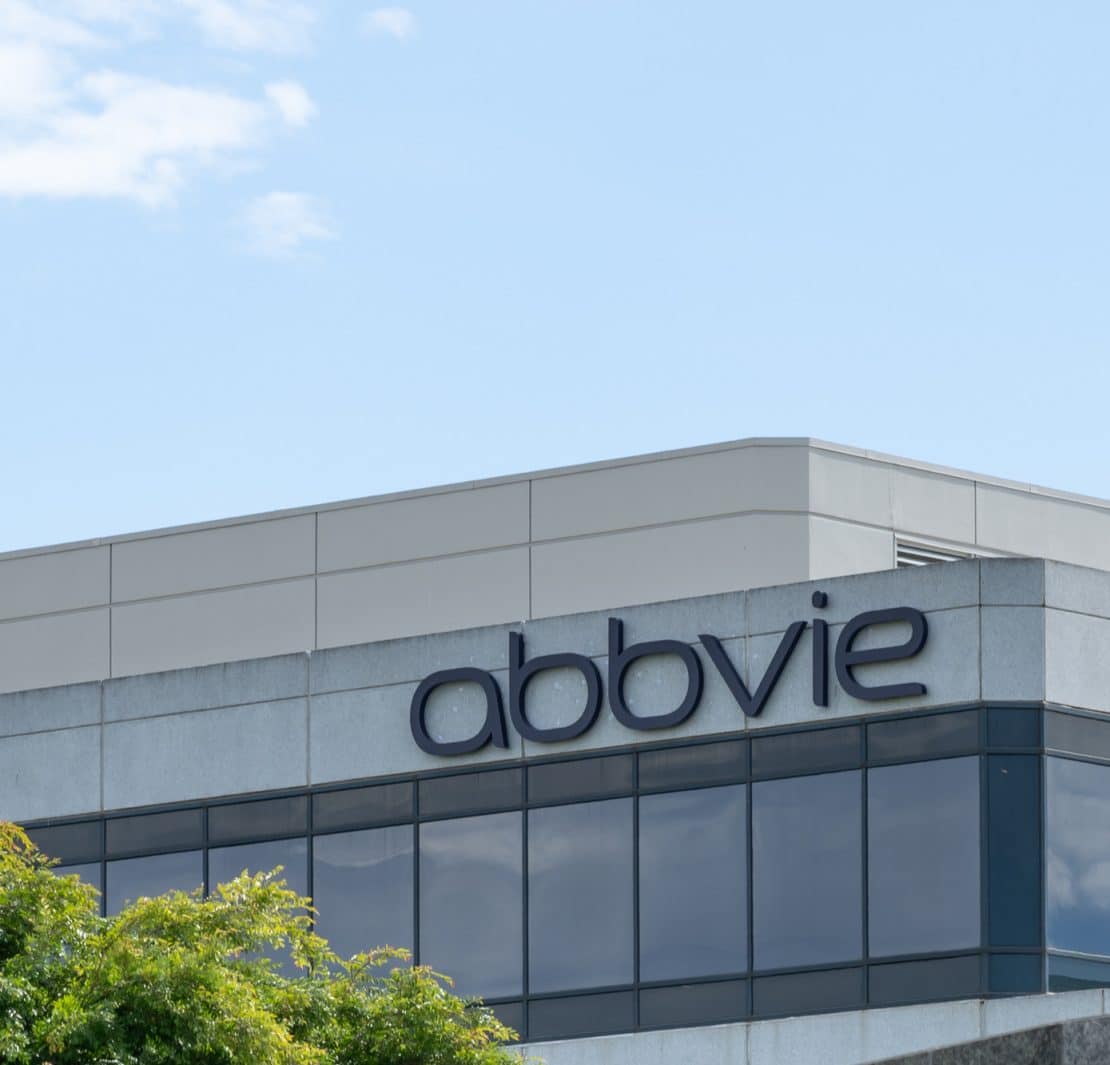
AbbVie has completed its $10.9 billion acquisition of Apogee Therapeutics, adding a group of clinical-stage drugs that could expand its immunology business and strengthen its position in respiratory medicine.
The pharmaceutical company completed the transaction Sept. 3, paying $135.11 in cash for each outstanding Apogee share. Apogee is now part of AbbVie, and its shares stopped trading on Nasdaq before the market opened that day.
The acquisition gives AbbVie control of a pipeline focused on inflammatory diseases including atopic dermatitis, asthma and chronic obstructive pulmonary disease, or COPD. The main asset is zumilokibart, formerly APG777, a late-stage antibody being developed for moderate-to-severe atopic dermatitis.
For AbbVie, the deal is a long-term investment rather than an immediate earnings driver. The company expects the purchase to reduce adjusted diluted earnings per share by $0.14 in 2026 and about $0.46 in 2027. AbbVie expects the acquisition to begin adding to adjusted earnings per share in 2032.
That timetable shows where the company sees the value. AbbVie is spending heavily now to secure drug candidates that could support growth well into the next decade.
Zumilokibart accounts for much of the deal’s value
Zumilokibart is central to the acquisition.
The drug is a long-acting monoclonal antibody designed to block IL-13, a protein involved in type 2 inflammation. IL-13 plays a role in diseases including atopic dermatitis and asthma.
In a Phase 2 study of patients with atopic dermatitis, about two-thirds of those treated with zumilokibart achieved significant skin clearance after 16 weeks, according to AbbVie. The company also reported improvements in itching and broader disease control.
Longer-term findings supported the potential for maintenance dosing once every three months or twice a year.
That dosing schedule could become an important commercial factor if later trials confirm the drug’s clinical profile. Existing biologic treatments have changed care for people with inflammatory diseases, but treatment frequency can still affect convenience and adherence.
A medicine that maintains disease control with fewer injections could give physicians and patients another treatment option. However, that advantage will depend on whether Phase 3 trials confirm the results seen in earlier studies.
AbbVie has attached much of the transaction’s value to zumilokibart. In materials published when it announced the acquisition, the company described the atopic dermatitis program as the largest component of the deal’s value. AbbVie also said Apogee’s pipeline could have multibillion-dollar peak sales potential.
The price reflects those expectations. AbbVie agreed to pay about 49% above Apogee’s closing share price on June 18, before the acquisition was announced. The company said it would fund the transaction with debt.
AbbVie is therefore paying a large premium for drugs that still carry development risk. The return will depend heavily on whether zumilokibart can repeat its earlier results in larger trials and gain a place in a competitive treatment market.
Apogee gives AbbVie another route into respiratory medicine
The acquisition extends beyond atopic dermatitis.
Apogee has also been developing APG273, a combination of zumilokibart and another antibody called APG333. APG333 blocks thymic stromal lymphopoietin, or TSLP, a protein involved in inflammation in the lungs.
The combination is being developed for asthma. AbbVie said Phase 1 data for APG333 showed a long half-life and suppression of relevant inflammatory markers for up to six months after dosing. Interim Phase 1b findings for zumilokibart in asthma also supported further development of the combination.
AbbVie sees potential for APG273 to be given quarterly or twice a year if later studies support that schedule.
This part of the pipeline gives the deal wider strategic importance. AbbVie already has a large immunology business, while Apogee provides another path into respiratory diseases such as asthma and COPD.
Apogee’s research has focused on established biological targets while trying to extend how long its antibodies remain active in the body. If successful, that approach could allow AbbVie to compete partly on dosing frequency as well as clinical performance.
The respiratory programs remain at an earlier stage than zumilokibart in atopic dermatitis. AbbVie acknowledged that difference when it announced the transaction, saying it had assigned only modest value to APG273 because of its early development stage.
That leaves significant uncertainty. Early clinical findings can support further study, but they do not guarantee that a drug will succeed in larger trials or reach the market.
AbbVie is paying today for potential growth in the 2030s
The Apogee acquisition shows the long time horizon behind major pharmaceutical transactions.
AbbVie is accepting near-term earnings dilution and additional debt for assets that may not make their biggest financial contribution for several years. The company has said it plans to maintain its existing capital allocation priorities and aims to return its net leverage ratio to about two times within two to three years after closing the deal.
AbbVie also reaffirmed its 2026 adjusted diluted earnings per share guidance of $13.87 to $14.07 when the acquisition closed.
The purchase gives AbbVie several possible sources of future growth rather than a single drug candidate. Zumilokibart provides the more advanced opportunity in atopic dermatitis, while APG273 and the wider pipeline could expand the company’s presence in respiratory and other inflammatory diseases.
The financial case will depend on clinical progress over the coming years. Later-stage trials will need to show that Apogee’s drugs can reproduce their earlier results, while commercial success would also require them to compete with established treatments.
AbbVie has accepted several years of expected earnings dilution to gain control of long-acting immunology assets that it believes can support growth in the 2030s. The next measure of that investment will come from the clinical data.
Source