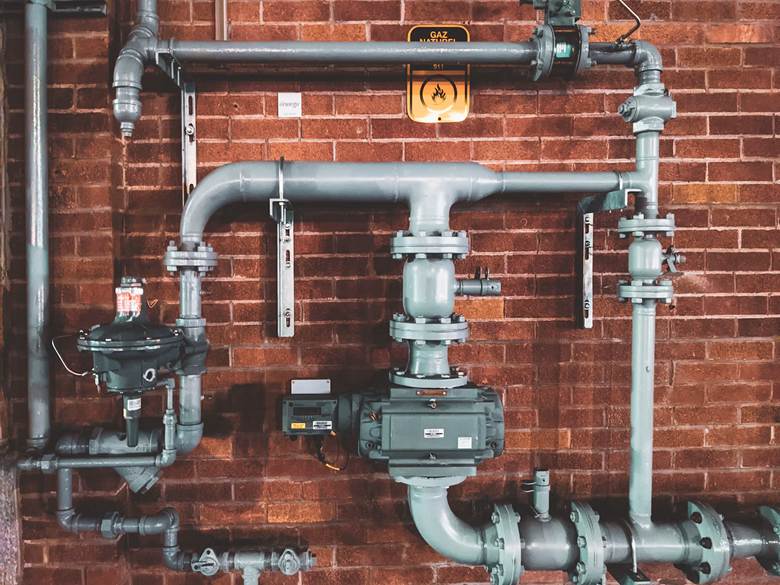
Hospital executives weighing replacements for aging water-heating equipment face decisions that affect patient safety and daily operations. Storage-tank, tankless and hybrid technologies bring different capacity limits and maintenance needs into the planning process. Comparing those trade-offs against the hospital’s compliance responsibilities gives leaders a clearer basis for upgrading infrastructure without disrupting care.
The Patient Safety Stakes of Aging Water Heating Systems
The Centers for Medicare & Medicaid Services requires healthcare facilities to establish a formal water management program and put it into practice, making equipment replacement part of a documented safety strategy. For hospital executives, choosing a new heater therefore involves assessing how the proposed installation will support that broader obligation.
To meet this responsibility, the plan must align with the American Society of Heating, Refrigerating and Air-Conditioning Engineers’ Standard 188. Its purpose is to limit the growth and spread of Legionella and other pathogens throughout the building’s plumbing.
Stagnation and unsuitable temperatures can encourage bacterial growth throughout a building’s plumbing, making these conditions central to infection control. Evaluating the heater’s design in that setting links the hospital’s documented obligations to the physical factors its water-management strategy must address.
Infection Control Advantages of Tankless Systems
By heating water as it passes through the unit, tankless equipment reduces the volume of water left in the heater between draws. Noritz explains the difference by noting that “there is no batch of warm water waiting in a tank between uses.” The potential advantage follows from removing a large reservoir that could otherwise remain idle.
A conventional tank presents a different challenge because cooler pockets can support bacterial growth even when its overall temperature reading appears acceptable. Mineral deposits may also shelter these organisms, making conditions within the vessel important to the comparison.
Tankless technology, however, does not prevent Legionella on its own, as effective control depends on proper operation and service throughout the surrounding plumbing. Any potential benefit inside the appliance must therefore fit within a broader safety strategy without implying that switching equipment lowers hospital infection rates.
Multi-unit arrangements link maintenance needs to operational continuity by allowing technicians to isolate one heater for servicing. Other connected units remain available during that work, creating redundancy within the installation rather than tying the entire supply to a single appliance.
Continuous production does not imply unlimited delivery, as each unit has a specified maximum flow rate. Sizing the array against overlapping outlet requirements therefore determines how much hot water it can supply at any given moment.
The Capacity Limits of Storage Tank Systems
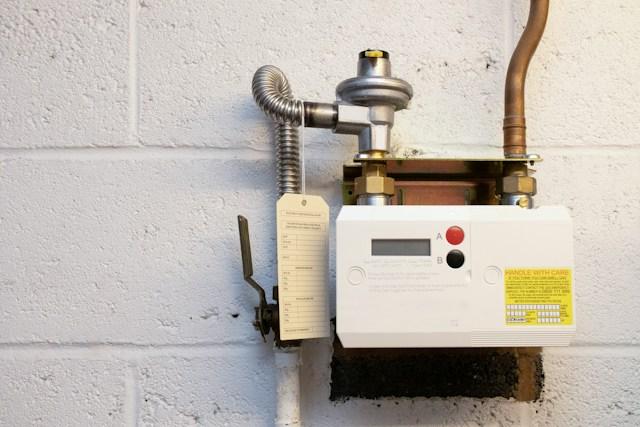
Where tankless equipment heats incoming water, a conventional tank relies on a preheated reserve that can reach capacity limits during periods of heavy consumption. Broadley’s Plumbing, Heating & Air Conditioning states that “a storage tank unit can’t provide continuous hot water for too long.” Simultaneous use brings that limitation into focus.
Broadley’s balances this drawback against the lower initial cost of conventional models while noting the energy needed to maintain a hot supply between uses. Those trade-offs also affect maintenance needs, since tank systems require attention to stored-water conditions while tankless systems depend on proper sizing, flow requirements and component upkeep. A less expensive purchase therefore does not necessarily translate into lower ongoing bills.
Tankless water heaters can introduce expenses of their own when the conversion requires electrical upgrades. Depending on the setup, the article identifies circuit-breaker changes or new wiring as possible additions to the work. Because that guidance concerns homes rather than clinical facilities, hospital teams would still need project-specific estimates to assess the financial implications of switching technologies.
Hybrid Systems as a Middle Ground for Temperature Control
Replacing conventional equipment allows a hospital to reconsider the balance between stored volume and heating capacity. PVI describes a blended design that pairs a smaller storage buffer with substantial heating output, explaining that “a modern sizing strategy incorporates the strengths of both instantaneous and storage systems.”
Automated controls adjust heating output as demand changes to keep temperatures stable. By responding to current use, the system can accommodate patterns that differ from the steady consumption assumed in older sizing methods, including seasonal fluctuations.
The operating temperature also affects those calculations, as higher Legionella mitigation settings alter the amount of heat the installation must supply. Accounting for that requirement during sizing helps align the proposed configuration with the facility’s water-management strategy.
Low-flow fixtures complicate that assessment because lower consumption at individual outlets can coincide with hotter system settings. A reduction in gallons used does not necessarily mean that heating requirements fall in the same proportion, making both variables important when assessing an upgrade.
Available floor space and minimum operating flow can rule out a model that otherwise appears large enough on paper. An installation must fit in the mechanical room and operate consistently during the building’s lightest use, without compromising energy performance or the cost of ownership.
Retrofit Planning Around Patient Care
Northwestern Medicine Delnor Hospital needed a more accessible layout because its original heaters stood roughly 10 feet above the floor. Sherman Mechanical brought in a specialist for a custom solution. Following several site assessments, engineers redesigned an aging water-heating system with replacement units at floor level, eliminating the need to climb a ladder for routine servicing.
Dedicated cleaning connections incorporated into the new arrangement addressed ongoing maintenance needs by allowing crews to clean internal heating components without removing them. Matt Brickey, a commercial sales representative at Metropolitan Industries, explains that “building crews will take the time to keep up with servicing.”
After the heating upgrade, the project expanded to include temperature-mixing controls and circulation pumps, resulting in three stages of improvements. Factory-mounted packages reduced on-site assembly because their components arrived already connected. The pump package included four variable-speed units mounted and wired together. The scope therefore developed from replacing individual equipment into updating how the wider network operated.
Electronic mixing equipment replaced the older mechanical valves to blend hot and cold supplies as demand changed. A connection to the hospital’s building automation system also enabled the operations team to monitor performance.
Hospital Chief Engineer Todd Spane describes one practical benefit of the improved access, reporting that staff could rotate the pumps monthly to distribute operating hours evenly. The published account supports these serviceability improvements but does not confirm uninterrupted water service throughout the construction period.
A More Resilient Path for Hospital Water Heating
Choosing among these approaches requires hospital leaders to connect water-safety obligations with the building’s actual demand and maintenance needs. The installation plan must then reflect the practical limits of carrying out changes while care continues. Keeping those decisions connected gives executives a more useful basis for modernization than comparing heater types in isolation.