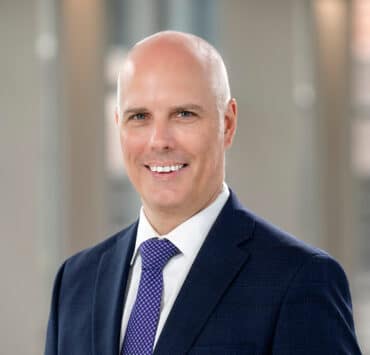
Trent Chastain was interested in the role. The revenue cycle leader had spent six and a half years away from his Indiana roots in Minot, North Dakota, leading Trinity Health’s revenue cycle team. His wife had been spending more time in Indiana with the couple’s grandkids than she was spending in North Dakota, and Chastain was thinking it was time to get back home. That’s when he was contacted about interviewing for a new role back in West Central Indiana.
“I asked where it was, and they told me it was Hendricks Regional Health,” the current revenue cycle director remembers. “I grew up about ten minutes from there, all the way through high school. So, I moved back home.”
Chastain is some forty-four years into his career. He’s a veteran of health systems and finding ways to drive revenue, creating better fiscal outcomes, so physicians and staff can create better patient outcomes. The director’s mantra has been remarkably similar during that period, even though so much about his role has evolved over the decades.
“I always tell my CFOs that it’s my job to keep them out of my office,” Chastain says. “I should always be a full step ahead. If I’ve got good news, great, you’re going to hear it. If I’ve got bad news, great, you’re going to hear it.”
The director is focused on making sure he can provide people with whatever information they need so they don’t have to track him down for it. He credits this as a reason he’s maintained such good relationships with his CFOs over the years.
“We’re always looking for new ways to help patients just focus on getting better.”
Trent Chastain
Since coming home to Hendricks Regional Health in 2018, Chastain, with the aid of his CFO, has been able to create significant transformation in their organization. Right off the bat, the director was tasked with helping his organization through a major transition, the implementation of the Epic EHR. Chastain had a five-month window to help prepare his team. The successful rollout has given way to a much broader focus on helping the health system embrace change.
“I’ve been in healthcare since the eighties, so I’ve seen how far we’ve come from doing everything manually to so much work being done through automation,” Chastain says. “Especially for Hendricks being an independent health system surrounded by much larger health systems, we needed to advance some of our technology that would be beneficial for us as well as our patients.”
The results have been clear. By focusing on technological agility and patient-centered service, net revenue increased by more than $125 million from 2020 to 2024. Hendricks has maintained a commanding market share, over 60 percent in its primary service area.
Early on, Chastain also recognized that denial management could not be siloed within the revenue cycle team alone. He established a denial task force team that included leaders and department heads from across the hospital, creating a collaborative approach that allowed the health system to address the root causes of denials, whether they stemmed from registration errors, coding issues, or payer data discrepancies.
Those efforts have reduced costly rework and improved payment timelines. The hospital’s AR days and denial rates now consistently rank among the best in the nation compared with other Epic EHR health systems.
In an effort to combat the complexity of payer interactions, Hendricks recently spearheaded a partnership with AI-driven software company VisiQuate for advanced denial analytics. The AI solution enables the revenue cycle team to proactively identify denial trends and intervene before they impact cash flow.
Hendricks also sought to reduce financial stress for patients by partnering with CarePayment, a zero-interest financing solution that allows patients a longer window to pay medical bills.
Advertisement
“Any time patients are in the hospital, they’re going to be worrying about how they’re going to pay for their care,” Chastain explains. “With the rise of high-deductible health plans, it’s our job to offset that worry in any way that we can. We’re always looking for new ways to help patients just focus on getting better.”
The revenue cycle director says his people leadership is focused on empowerment, avoiding micromanagement whenever possible. He provides his people with the tools, training, and autonomy they need to thrive. Chastain encourages his team to see themselves as the subject matter experts they are, and his door is always open. This approach might account for the talent retention on the revenue cycle team.
“I started out as a filing clerk, and then I worked my way through just about every role that exists in the revenue cycle,” Chastain shares. “I know how important every job is, and I want everyone here to know that I support them. I’ve been fortunate and blessed to be able to be part of organizations that have been very successful by having the backs of our associates and colleagues. The feedback I love to hear the most is that people feel like they can talk to me about anything.”
“We are proud to partner with Trent, whose leadership reflects a deep commitment to serving the uninsured and underinsured. He shares ClaimAid’s vision to positively impact the lives we touch, driving collaboration and results. Our partnership ensures patients receive critical care while maximizing reimbursement for Hendricks Regional Health,” says Chas LaPierre, the president & CEO of ClaimAid.
Chastain is happy to be home. Outside of work, his family has an active faith life, and the director is an Indiana sports fan. He says he’s grateful for his wife (whom he calls “beautiful”) and his children and grandchildren. As he approaches retirement, Chastain says he’s got everything he could ever want to begin his next chapter, but he’s got a few more lines to write in this one.
ClaimAid is a trusted healthcare services company specializing in eligibility and enrollment, Medicaid billing, and claims resolution. Since 1989, ClaimAid has supported hospitals, schools, and employers by guiding individuals through complex healthcare coverage processes and helping providers secure reimbursement for services delivered. With deep knowledge of Medicaid programs and a people-first approach, ClaimAid ensures financial sustainability for its clients while improving access to care for underserved populations. We value our longstanding collaboration with providers and are proud to stand alongside leaders in navigating healthcare reform and policy shifts that impact patients, institutions, and the broader health coverage landscape.